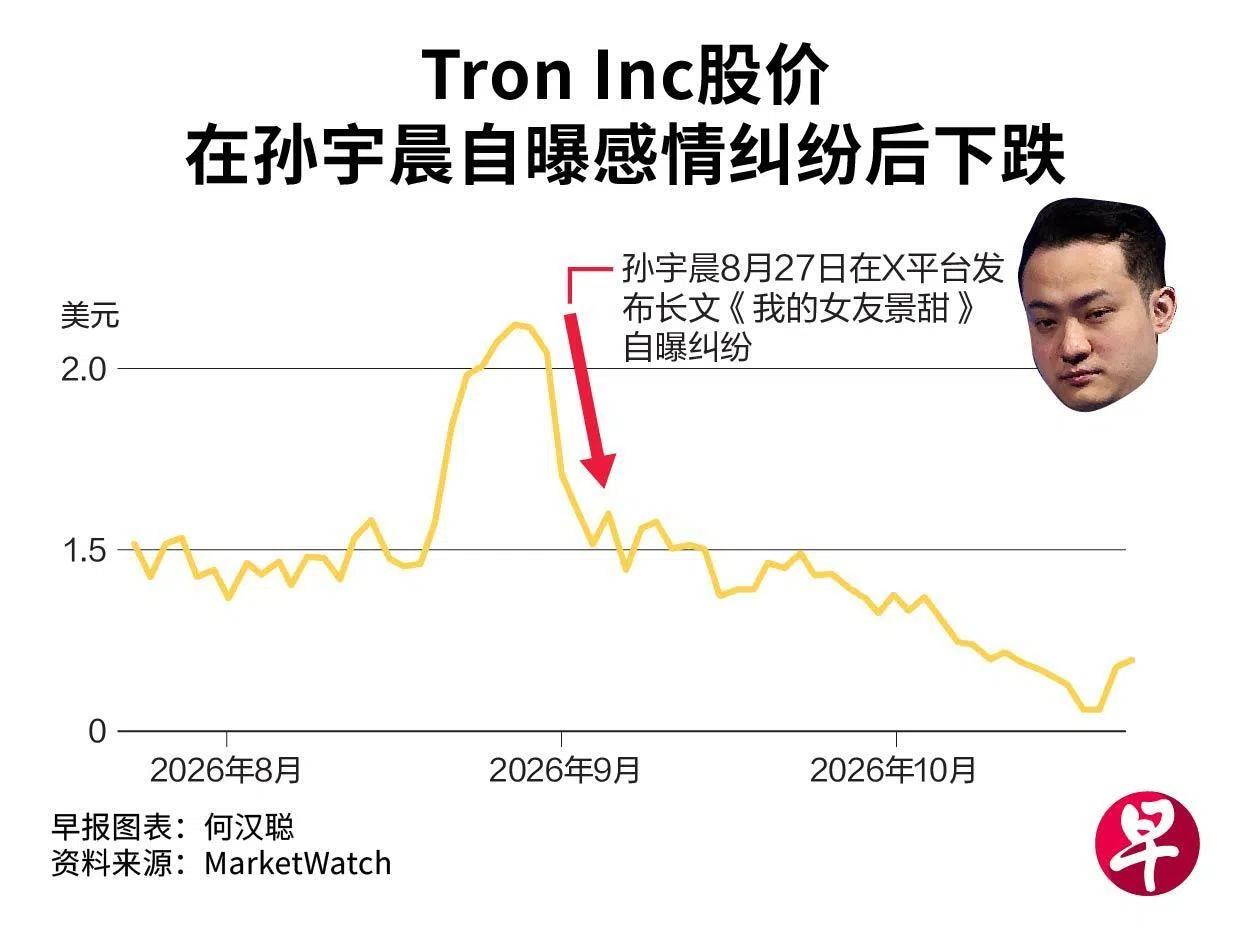
When Chinese cryptocurrency tycoon Justin Sun broke off his engagement with actress Jing Tian, it wasn’t just the amount he sued her for that was eye-watering (30 million RMB or about S$5.7 million if you must know).
Share prices of his Nasdaq-listed Tron Inc plunged 23.36% following his post about their relationship, from US$2.14 on 27 August to US$1.64 five trading days later — wiping more than US$200 million (about S$255 million) off its market value.
Comparatively, shares in Solana Company, which has a similar business model to the blockchain platform Sun founded, fell by just 3.29% over the same period.
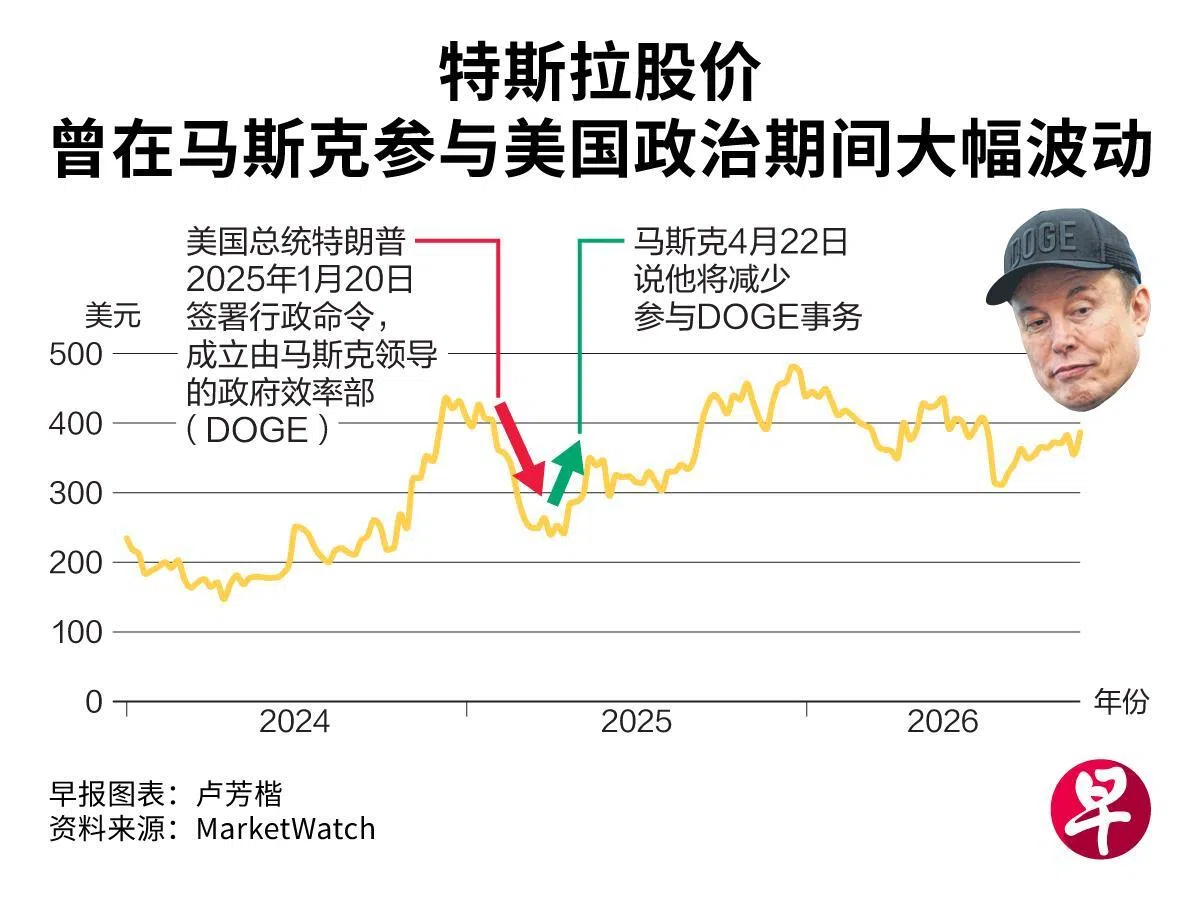
It is not uncommon for the public image of a company and its leadership to be closely intertwined, especially in the technology sector. The world’s richest man, Elon Musk, is the face and strategist of Tesla and SpaceX, enough for some investors to pay more heed to his words and actions than the companies’ financial results.
Never mind that Tesla recently reported a 43% year-on-year plunge in third-quarter net profit, or that its share prices fluctuated with Musk’s activities in the political arena. Investors were more excited by his announcement that revealed that a merger between Tesla and SpaceX remained possible. They liked the idea of combining automotive and rocket technology, while seeing the next-generation Roadster convertible bring the “flying car” concept closer to reality. Tesla’s share price glided upwards and SpaceX also posted a marked increase.
Celebrity leadership as a double-edged sword
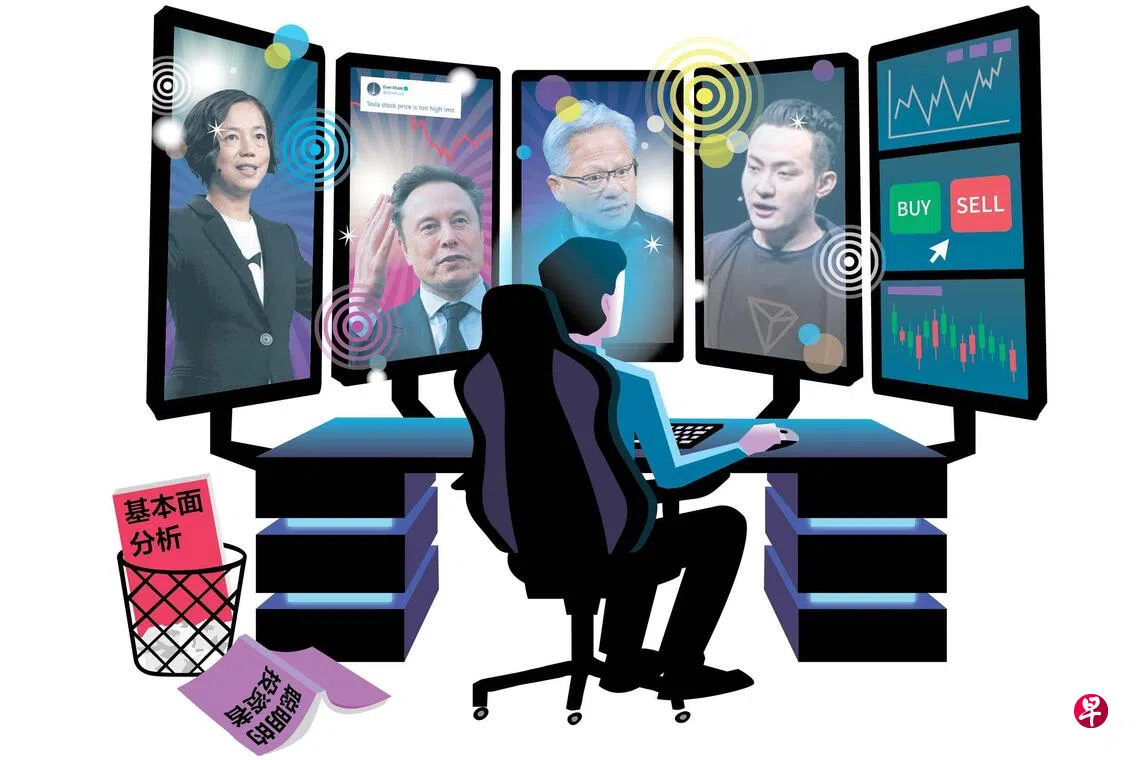
Against this backdrop, investors deciding whether to buy a stock must assess not only the company’s balance sheet, cash flow, profitability and growth prospects, but also the quality of its management and the influence of its key personnel.
Lindsey Stewart, director of investment stewardship research at Morningstar, told Lianhe Zaobao that public figures such as Musk and Nvidia’s Jensen Huang are central to the investment case for their companies. This could be a double-edged sword when ascribing value and assessing risk that is tied individuals and their conduct.
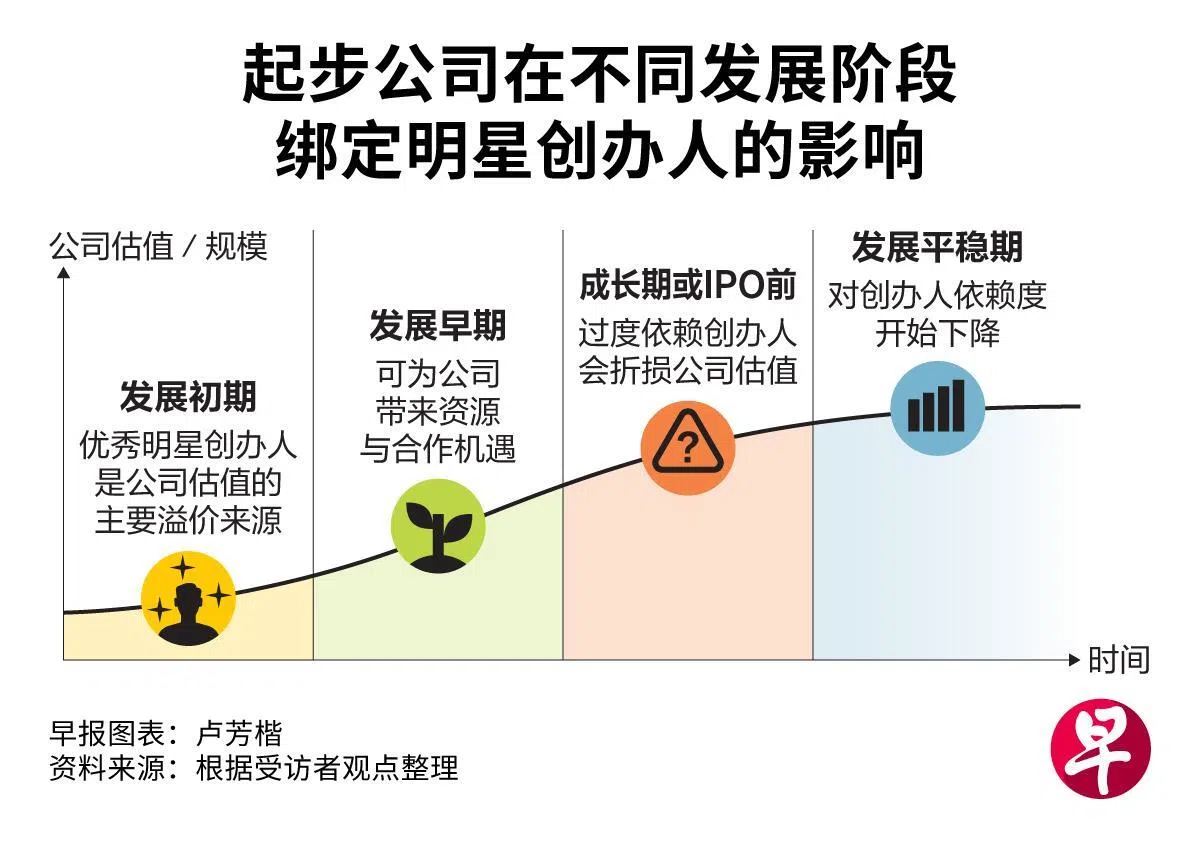
Gary Tan, a portfolio manager at Allspring Global Investments, said in an interview that a founder’s influence could be viewed as a positive intangible asset when it helps to attract capital, talent, customers or strategic partners, “especially when supported by a demonstrated record of value creation”.
Under Huang, for example, Nvidia’s market capitalisation has surpassed US$5 trillion, while revenue doubled in each of the past two financial years. To some extent, this has further strengthened Huang’s influence over the company.
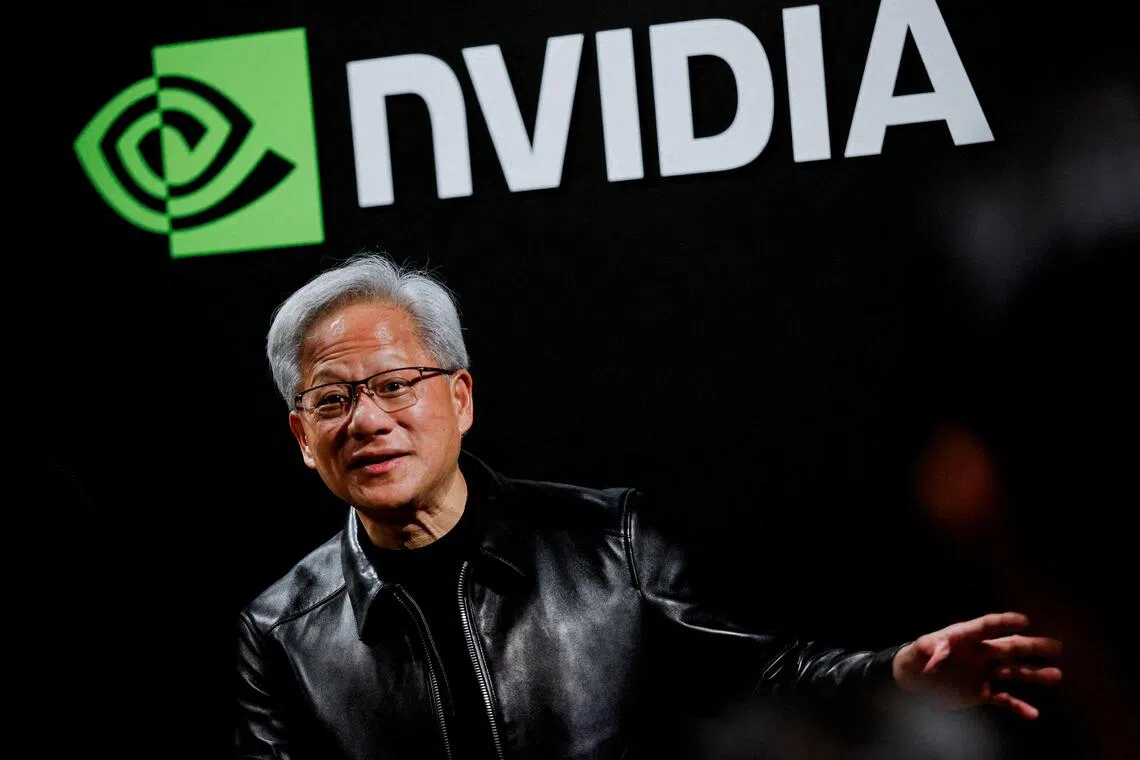
But Tan pointed out that if a company’s decision-making power, brand image and even investor confidence rested with one person, investors would also typically factor a “key person discount” into its valuation. “We can reflect a founder’s potential impact by adjusting the equity risk premium or applying a premium or discount to valuation multiples relative to peers.”
Sean Teo, a sales trader at Saxo Singapore, said in an interview that most analysts would apply a discount or premium of between 10% and 20% in their valuation models, depending on the extent of the individual’s influence. Bad news, such as if the key figure in a company makes alarming remarks, treads on sensitive social and political issues, or is embroiled in a scandal, could bring their company’s share prices down with them.
The impact could be worse should the company’s regulatory standing or government relations take a hit too, which has happened in China’s internet industry, Tan said. Teo’s advice is for investors to diversify their portfolios to cushion against such unique risks.
Excessive control and weak oversight can undermine corporate governance
What about risks to corporate governance?
Stewart noted that during SpaceX’s initial public offering (IPO), a number of institutional investors questioned whether the board was too close to Musk to be able to fulfil its duty of independent oversight.
Corporate governance expert Professor Mak Yuen Teen of the National University of Singapore Business School told Lianhe Zaobao that inadequate internal oversight could jeopardise corporate governance when a founder was too entrenched in the organisation and held too much control.
The founder needs to be sufficiently capable and care about the company’s long-term interests. “But if that person is no longer fit to lead, or their business philosophy simply does not work, it will create long-term corporate governance risks.”
Adam Neumann, co-founder of co-working pioneer WeWork, was once a darling of the venture capital world who attracted considerable investor attention. But his conduct and management style raised eyebrows. He loved wild parties and would make outlandish remarks such as wanting to become “president of the world”. He also pledged substantial holdings of unlisted WeWork shares to borrow hundreds of millions, drawing widespread investor criticism.
By the time WeWork prepared to go public, Neumann’s overly aggressive business expansion prompted market doubts about the company. His excessive control over the business also became a “risk factor” that had to be explicitly listed as such in its prospectus. Ultimately, he was ousted by major investor SoftBank.
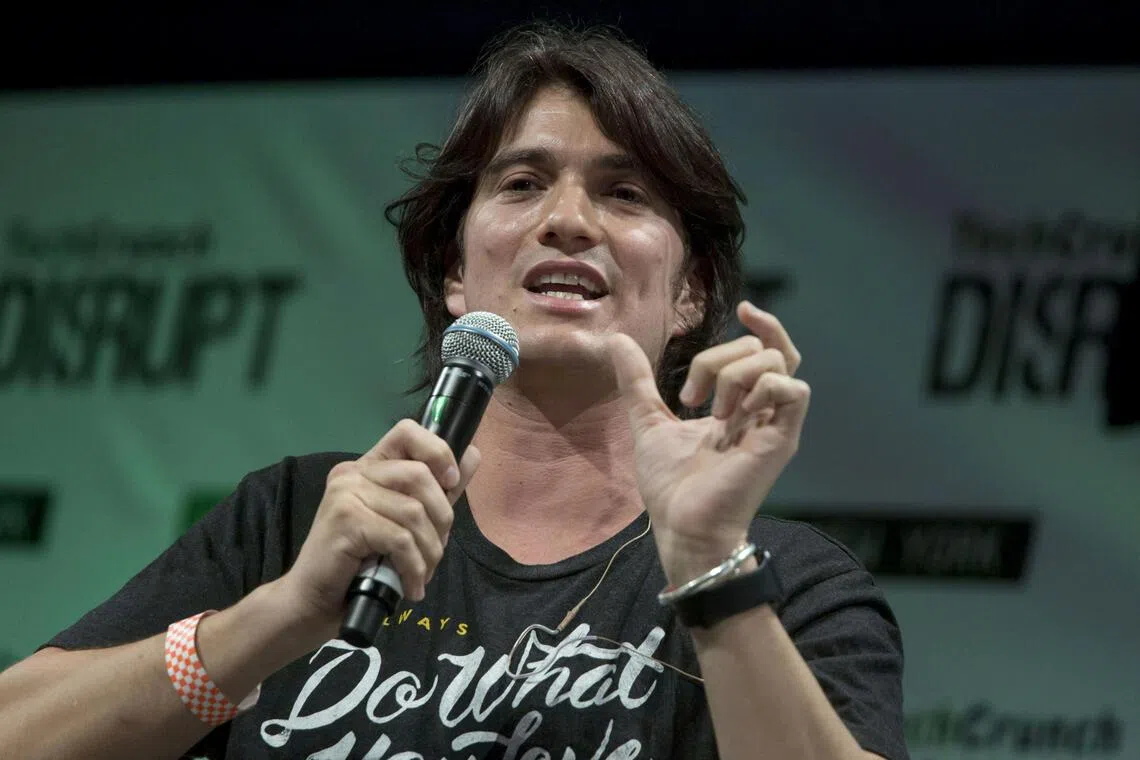
Prof Mak said celebrity entrepreneurs of this kind typically paid little heed to conventional corporate governance standards, could be non-conformist in their management styles, and often held enormous control, making effective oversight and checks difficult.
Marcel Oldenkott, co-chief investment officer at German asset manager BIT Capital, said in an interview that excessive control could be problematic for a company when its founder’s leadership style no longer suited its stage of development, or should the founder begin diverting attention to other ventures.
There are also reputational risks, when the CEO’s brand is coupled with the company’s brand, says Wong Pei Wen, Programme Director, Master of Media and Communication at Nanyang Technological University.
Celebrity entrepreneurs are only human after all and may attract scandal in private that could hurt the company in public.
Naturally, that celebrityship could be turned into an advantage from a corporate communications standpoint. Wong noted that popular corporate leaders who were both charismatic and comfortable with public scrutiny were rare, but when you do have such a CEO, “you can intentionally leverage this as a strategy to humanise the brand” and “amplify corporate messages more effectively”.
“A superstar CEO gives a company a human face,” said Wong. “A charismatic CEO is one of the few corporate assets that cannot be easily replicated by competitors.”
Celebrity entrepreneurs and the succession challenge
There is also the issue of succession planning, something that is harder when a company’s fortunes are tied linked closely to just one person. Identifying successors and revealing continuity plans for the short to long term become a more touchy and time-sensitive topic for both CEOs and company boards.
This is something that founders with strong personalities may drag their feet on, feeling still healthy, relevant and vital to the company, observed Prof Mak. “So I always tell the nominating committee, even if the dominant founder doesn’t want to talk about succession, the board has to think about succession.”
Reports earlier this year noted that, more than 30 years after founding and leading Nvidia, Huang had yet to publicly disclose a succession plan, and this remained a long-standing concern for many institutional investors. Nvidia counts several highly regarded technical experts among its ranks, but there has been no sign yet that they are ready to participate in shaping broader strategy.
Prof Mak cites Apple as a positive example of a company that pulled off a smooth leadership transition after the unexpected loss of Steve Jobs, who practically dictated the company’s design aesthetic and philosophy.
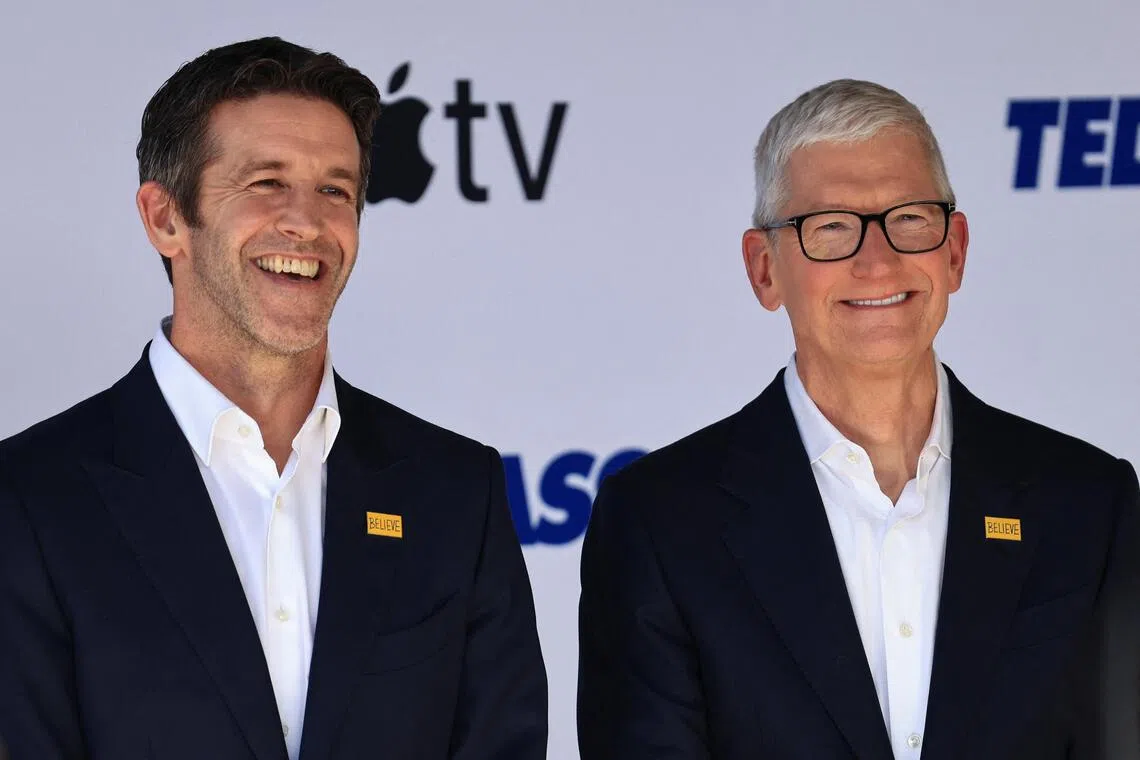
It helped that he involved his executives such as Tim Cook in managing the company while he was alive, said Prof Mak. “If you read the relevant material, you’ll find that Tim Cook was basically running operations in Apple for a long time, alongside Steve Jobs.”
When Cook took over, he also made a conscious effort to share the spotlight with senior executives from different parts of the business at Apple’s launch events. The transition of power to John Ternus this year was smooth, with Cook consistently redirecting public focus to his successor.
Start-ups and AI: When star founders carry a further premium
Start-ups typically thrive on high-profile leadership more than listed companies do.
The way Cynthia Zhang, founder of FutureX Capital, put it in an interview, “at the angel and early investment stages, founders are usually not a source of valuation discounts, but the main source of a premium”.
At the early fundraising stage, the management team and founders often carry the greatest weight in valuation frameworks, accounting for as much as 30% of value scored. This premium had been pushed to extremes in the artificial intelligence (AI) era, said Zhang.
After Ilya Sutskever left OpenAI as chief scientist, he founded AI firm Safe Superintelligence (SSI) with only about 10 employees and no product at its first funding round, yet it was already valued at US$5 billion. In less than a year, its valuation rose to US$32 billion.
Similarly, some tech giants bring key individuals on board when acquiring AI start-ups.
World Labs, the AI start-up founded by “godmother of AI” Fei-Fei Li, announced this year that it would be acquired by US chipmaker AMD for US$8.2 billion. Li would also join AMD as chief scientist, reporting directly to CEO Lisa Su.
Tilo Bonow, a technology venture capitalist and founder of PIABO Communications, said in an interview that a key figure’s public image could bring market attention and recognition in its early stages, and open doors to more business opportunities.
What if personal fame depreciates
When a founder’s fame and influence starts to deplete, investors may place greater value on the ability to turn intangible strengths into tangible returns. “I never pay for ‘fame’ itself, only for what that fame can be converted into,” said Zhang.
At the growth or pre-IPO stage, “I assess founder dependence separately along three dimensions: whether their capabilities can be replaced, whether their credibility can be transferred to others, and whether governance provides checks on their power. This ultimately informs the price range, the structure of the terms, and the second tier of leadership we need to help the company build after investing.”
Bonow also stressed that, as companies grew, good founders would build teams and operating systems in advance to ensure the business could continue functioning normally when they stepped away from day-to-day affairs.
As an investor, Bonow often asked himself whether a company’s customers would stay if its founder stepped away from the business for six months. Could the management team still make difficult decisions? Would partners continue to trust the company?
“That usually tells you quite a lot.”