

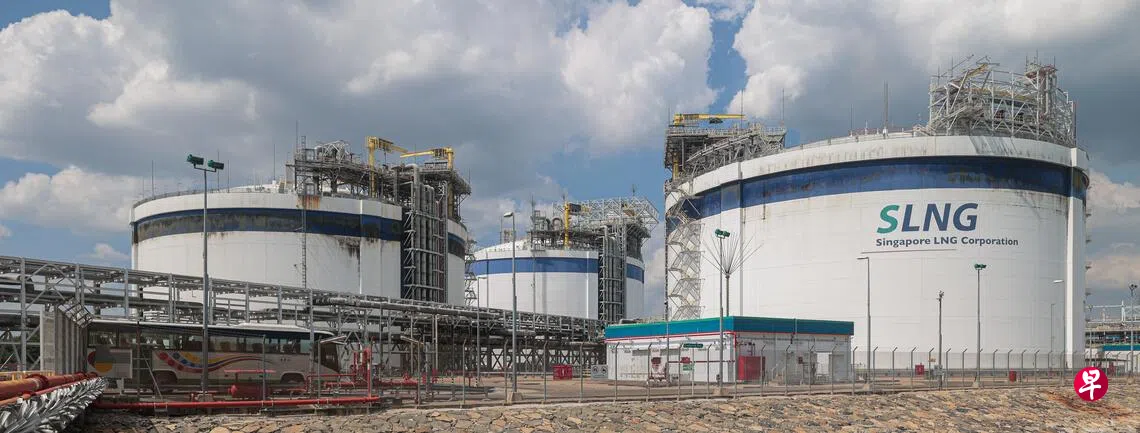
At the opening of Singapore International Energy Week on Monday (26 October), Singapore rolled out a sweeping slate of energy infrastructure plans spanning six areas: the power grid, power generation, natural gas, solar energy, energy storage and electricity imports. Among them is a plan to invest up to S$5.3 billion between 2025 and 2029 to expand the power grid. These deployments have clear objectives: to strengthen the energy system's resilience and increase generation capacity, preparing for both international turbulence and rising electricity demand.
Just days before the event opened, Indonesian officials warned that the country might stop exporting natural gas after 2028 to countries that “do not respect” Indonesia. The relevant authorities subsequently cut gas supplies to Singapore from 24 October, citing the need to safeguard domestic energy needs. Although the reduction amounts to less than 2% of Singapore's daily gas demand and has a limited direct impact on local electricity supply, it sends an important warning: even long-term supply arrangements cannot guarantee uninterrupted energy supplies. Singapore must further diversify its energy sources and broaden its alternatives, including seriously assessing the feasibility of developing nuclear energy.
Some netizens may see Singapore's announcements over the past few days as a response to Indonesia's threats. But these policies require years of planning, investment and preparation; they could not have been approved and rolled out within days. In fact, Singapore has long been planning ahead for energy security. It began hosting Singapore International Energy Week as early as 2008, and continued to have discussions on energy transition and security of supply. Moreover, the Ministry of Trade and Industry was formally renamed the Ministry of Energy, Trade and Industry (METI) on 1 October. This also reflects Singapore's prior recognition of the risks posed by rising resource nationalism worldwide, and the significantly greater priority it has given to energy security.
For a small country with no natural resources and limited land, diversification is a vital survival strategy, whether in food, water or trade. In water, the development of the Four National Taps — water from local catchment, imported water, NEWater and desalinated water — has successfully freed Singapore from complete dependence on traditional sources, turning a water crisis into opportunities for survival and business. In food, import sources have expanded from about 140 countries and regions 20 years ago to more than 180 today. Natural gas supplies follow the same principle of diversification. In 2008, Indonesia accounted for three-quarters of Singapore's total natural gas imports. By 2024, no single source accounted for more than 30%.
Although Singapore has worked assiduously over the years to diversify its sources, the indisputable fact remains that it is heavily reliant on energy imports. When geopolitical conflicts disrupt supplies at their source or block maritime transport routes, Singapore remains vulnerable to sharp fluctuations in supply. Domestic energy prices could rise as a result, undermining confidence across the board. In his speech at Singapore International Energy Week, Minister for Energy, Trade and Industry (Energy and Industry) Tan See Leng explicitly voiced concern about the rise of resource nationalism. Energy is a strategic resource for every country. When supplies are tight, countries may prioritise domestic needs or even review existing export arrangements, leaving import-dependent countries to bear the risks.
Meanwhile, the rapid growth of artificial intelligence (AI)-related industries and the increasing number and scale of data centres will inevitably push electricity demand higher. With external supplies facing uncertainty and domestic electricity demand continuing to rise, how can Singapore ensure an adequate and reliable energy supply, so that it retains the power to sustain economic development and technological innovation?
About 95% of Singapore's electricity comes from natural gas. Diversifying supply sources is one part of the effort; developing alternative energy sources is another priority. Beyond existing waste-to-energy generation and solar photovoltaics, Singapore is actively exploring other possibilities. Deputy Prime Minister Gan Kim Yong announced last Friday (23 October) that Singapore would trial the import and supply of biomethane as an alternative to natural gas for power generation. At the opening of Singapore International Energy Week, Tan also revealed that Singapore has substantial geothermal energy resources deep underground. Preliminary estimates put their potential at more than 60 times the country's current annual electricity consumption. The Energy Market Authority will begin the next phase of its study at the end of this year.
Among the alternative energy options, nuclear energy, which can provide a steady supply of electricity around the clock, merits serious study. The government began exploring the feasibility of nuclear power more than a decade ago. However, a preliminary feasibility study in 2012 concluded that the nuclear technologies available then were unsuitable for land-scarce, densely populated Singapore. Advances in nuclear technology have since changed the picture. At an event held in conjunction with Singapore International Energy Week, Tan announced that the Energy Market Authority and the National Environment Agency has appointed a panel of consultants to help Singapore prepare for International Atomic Energy Agency’s (IAEA) Integrated Nuclear Infrastructure Review Phase 1 Mission by the next year.
Nuclear power plants entail complex safety requirements, and Singapore, with its limited land and dense population, must proceed with particular caution. Nuclear energy may not be the only answer to Singapore's pursuit of energy resilience, but neither should it be ruled out before a thorough assessment is made. Faced with rising resource nationalism and an increasingly complex international landscape, Singaporeans must remain clear-eyed about the country's vulnerabilities. At the same time, however complex and challenging the circumstances, Singapore will plan ahead and spare no effort in laying the groundwork for the future, ensuring that the nation’s survival and progress remain firmly in our own hands.
