

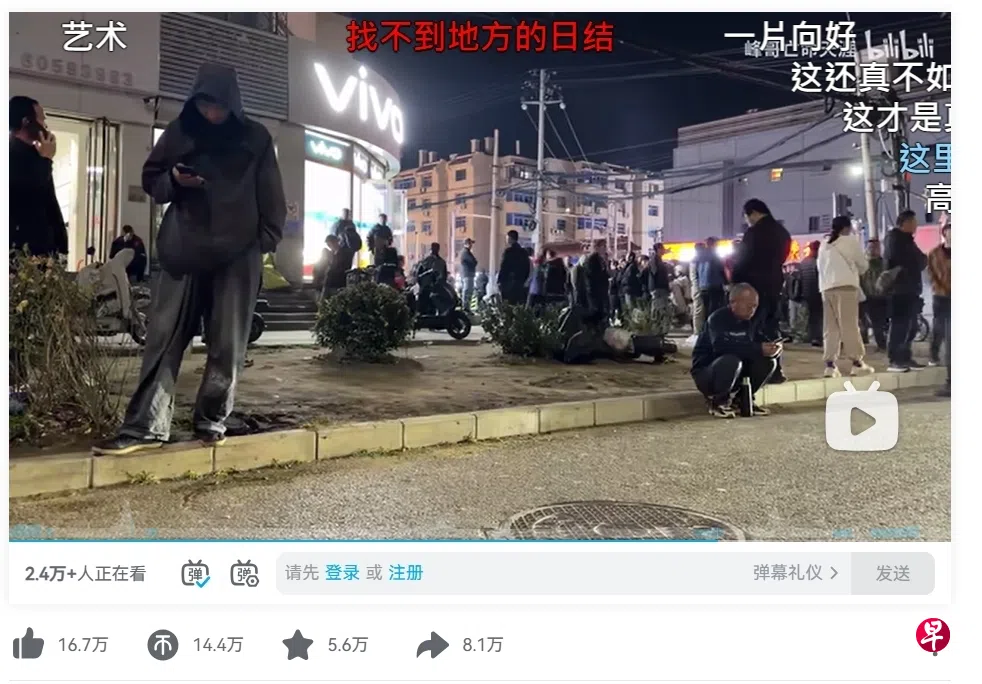
Set to the lyrics “Living like this for 30 years, until the building collapses”, a video of Chinese internet personality “Fengge Wangming Tianya”, whose real name is Zhou Lifeng, trying out daily-paid work at Beijing’s Majuqiao casual labour market has gone viral. The “other China” evoked by Folding Beijing has once again come into public view.
Zhou, who became known for filming people at the bottom of Chinese society, posted the 25-minute video, A Day Trying Out Daily-Paid Jobs in Majuqiao, on video-sharing platform Bilibili on Sunday (25 October). It documents what he saw and heard during his visit this month. Within a day of its release, it had drawn 2 million views, more than 150,000 likes and 70,000 shares on Bilibili alone.
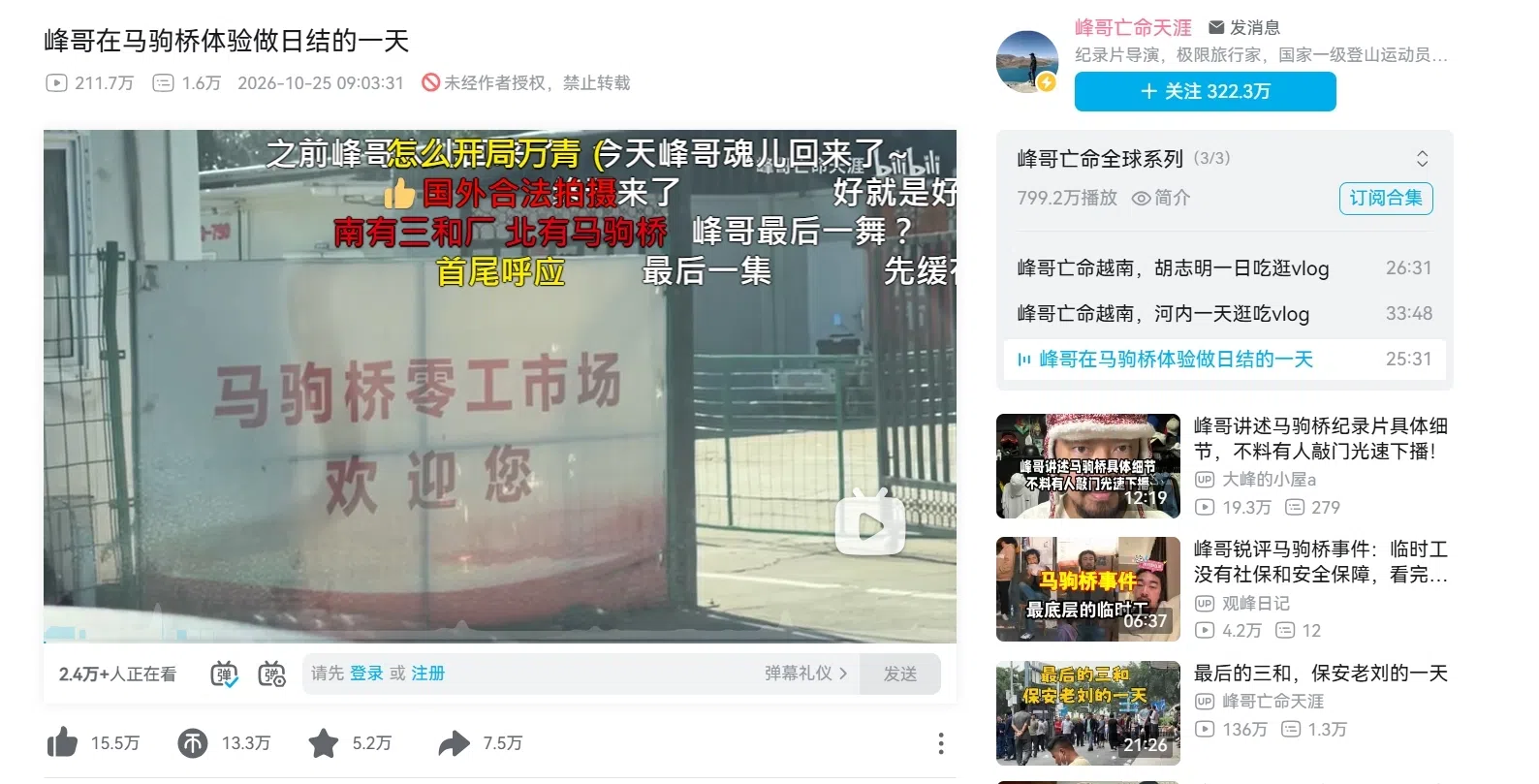
Among China’s more than 300 million people in flexible employment are daily-paid workers who take on different casual jobs each day for irregular wages. Moving between the fringes of urban and rural life, they struggle to make ends meet on daily earnings. Their circumstances reflect life at the bottom of China’s labour market.
In Beijing, a saying spread through word of mouth goes: “When you fall on hard times, head to Majuqiao.” The town, on Beijing’s southeastern outskirts, borders the Beijing Economic-Technological Development Area, established in the 1990s. With numerous construction sites and factories nearby, strong demand for temporary workers has given rise to northern China’s largest roadside gathering place for casual labourers. Workers from across the country assemble on Majuqiao’s streets before dawn each day, hoping to secure a day’s work.
Zhou’s video depicts the world of casual labour in Majuqiao: daily wages of around 100 yuan (S$19) to 200 yuan; dirty, cramped shared accommodation costing just 15 yuan a night; small eateries offering a filling meal for little more than 10 yuan; noisy streets where some people urinate in public; young people unable to find full-time jobs; lorries illegally transporting workers like cargo to worksites; and recruitment advertisements claiming to offer pay of up to 9,999,999 yuan, seeking only well-proportioned women and urging them to “live boldly — you only live once”.
Zhou described the video as a “sanitised version” featuring food, drink and leisure. His actual experience in Majuqiao, he said, was “more brutal than going to the front line in Ukraine”. “All the real footage has been deleted”, because he “cannot do anything that harms the country”. Even so, the video’s restrained portrayal shocked many Chinese viewers on Bilibili, whose users are predominantly young.
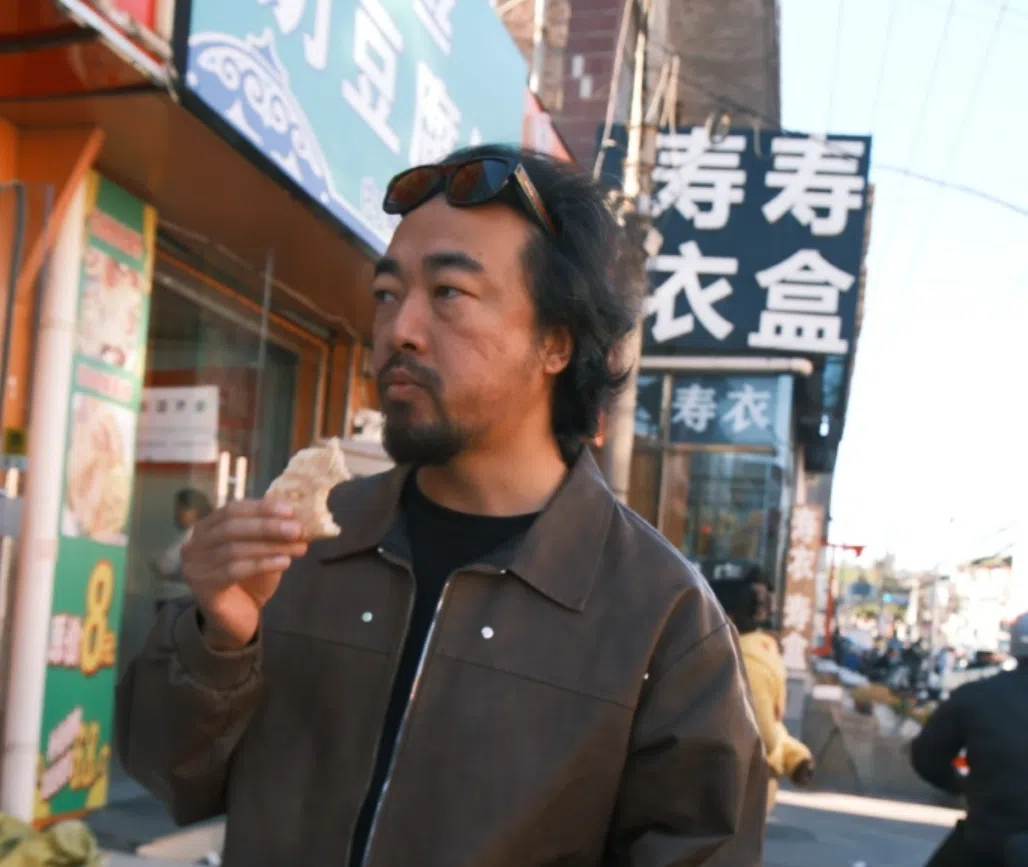
Among the most-liked comments, one viewer lamented: “I can’t bear to watch this sort of content. Their lives are so hard, so miserable.” Another, referencing the Chinese authorities’ push to ensure social insurance coverage for everyone eligible, joked that this was “Lifeng risking his life undercover in Majuqiao to root out the villains who haven’t paid their social insurance contributions”. A comment liked by Zhou read: “Patriotism is not abstract. It is concrete: it means loving every individual and hoping that all ordinary Chinese people can live good lives.”
Majuqiao’s population grows despite repeated clearances
China’s state-run Workers’ Daily reported in 2023 that, unlike those in formal recruitment markets, many people making a living in Majuqiao were low-skilled workers rejected by the regular labour market: older migrant workers above employers’ age limits, young people unable to pass medical examinations because of illness, debt defaulters on credit blacklists, and small business owners left bankrupt and unemployed.
“They, too, want to find stable work and stop drifting. Yet their experiences often leave them with little choice but to turn to Majuqiao,” the report said.
A report in Vista magazine noted that daily-paid jobs found on Majuqiao’s streets required no interviews, medical examinations, employment contracts or proof of hiring. “Strictly speaking, this is an illegal labour market that cannot operate openly.”
According to reports, Majuqiao town carried out more than 100 “Dama operations” over six months in 2019 to clear out the “illegal labour market”. “But these people would leave and return, only to be driven away again. The more they were driven away, the more of them there were.” Between 2000 and 2020, the town’s registered population doubled from 22,100, while its resident population grew nearly sevenfold from 26,700.
In 2024, Beijing’s authorities issued trial guidelines on the regulated development of casual labour markets, explicitly calling for the gradual elimination of “disorder”, including the occupation of roads and pavements and unregulated matching of casual workers with employers. The Majuqiao town government subsequently converted a disused car park into the official Majuqiao Casual Labour Market, bringing in more than 20 formal human resources agencies.
In a report published last Thursday (22 October) based on a visit in May, online news outlet HK01 said that despite the establishment of an official, regulated labour market, people seeking work still preferred to gather spontaneously on the streets. Most were young and middle-aged men. Women generally travelled in groups because “women in Majuqiao face particular difficulties, including childbirth, menstruation and sexual harassment”.
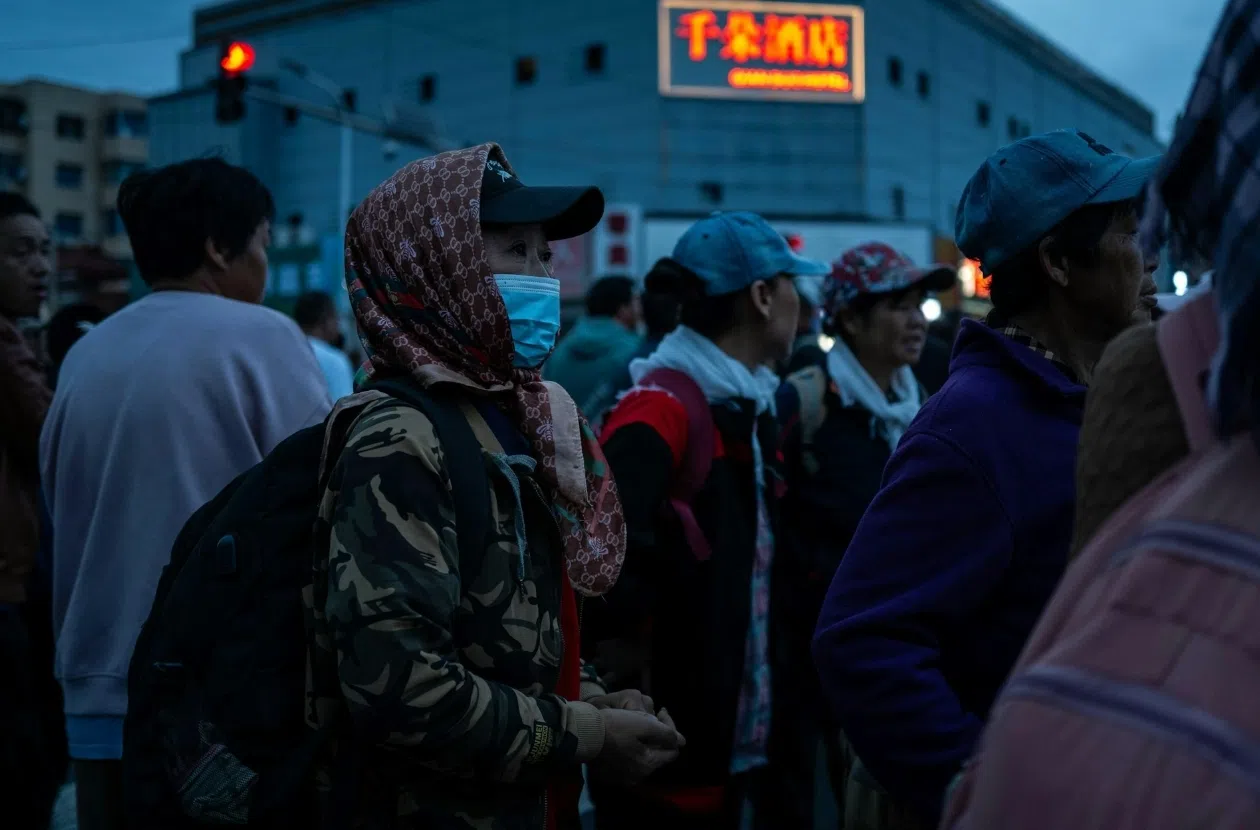
Chinese media outlet Meiri Renwu has described Majuqiao as the very end of the industrial chain, where large numbers of daily-paid workers depend on scraps of work left over by huge factories, moving between sorting, loading, unloading, carrying and cleaning jobs. “It is not merely a place; it has become a phenomenon. It accommodates countless people in limbo, physically away from their hometowns yet unable to feel part of this city. Adrift, they have only Majuqiao to cling to.”
Cong Rui’an, a doctoral student in political science at Tsinghua University, published a new book in May, Majuqiao Time: My Days as a Day Laborer. Since 2018, he has made repeated field research visits to Majuqiao, living in tiny partitioned rooms, squeezing into crowds waiting for work before dawn, and joining workers in sorting parcels, working as security guards and taking jobs in electronics factories. These experiences have given him extensive first-hand research material.
Writing on WeChat Reading in August, Cong said some workers in Majuqiao were striving to support their families, while others appeared to have given up striving. “But whatever their circumstances, they all sustain Beijing through their sweat and toil. Just as beyond Majuqiao, beyond Beijing, countless workers in countless cities around the world sustain society through their sweat and toil.”
Casual labour markets across China
Large daily-paid labour markets have now formed on the outskirts of all four of China’s first-tier cities. Besides Majuqiao in Beijing, they include Songjiang in Shanghai, Shiling town in Guangzhou and the Sanhe labour market in Shenzhen. Similar markets have also developed in the provincial capitals of Henan, Anhui and Sichuan, which have abundant labour supplies.
Cong said many people might discover, simply by opening a map app, that an urban village where migrant workers gather or a casual labour market lies just a few kilometres away — somewhere they had never noticed. “We are so close, yet so far apart.”
Majuqiao does not represent the whole of China’s job market. But like a mirror obscured by urban prosperity, it reflects the darker side of flexible employment.
In an interview with HK01, Cong said that resolving Majuqiao’s problems was fundamentally a matter of addressing labour rights and institutional protections. Heavy-handed closures and evictions would not solve them. “Our country must always leave a space that provides a safety net for those at the bottom.”
