

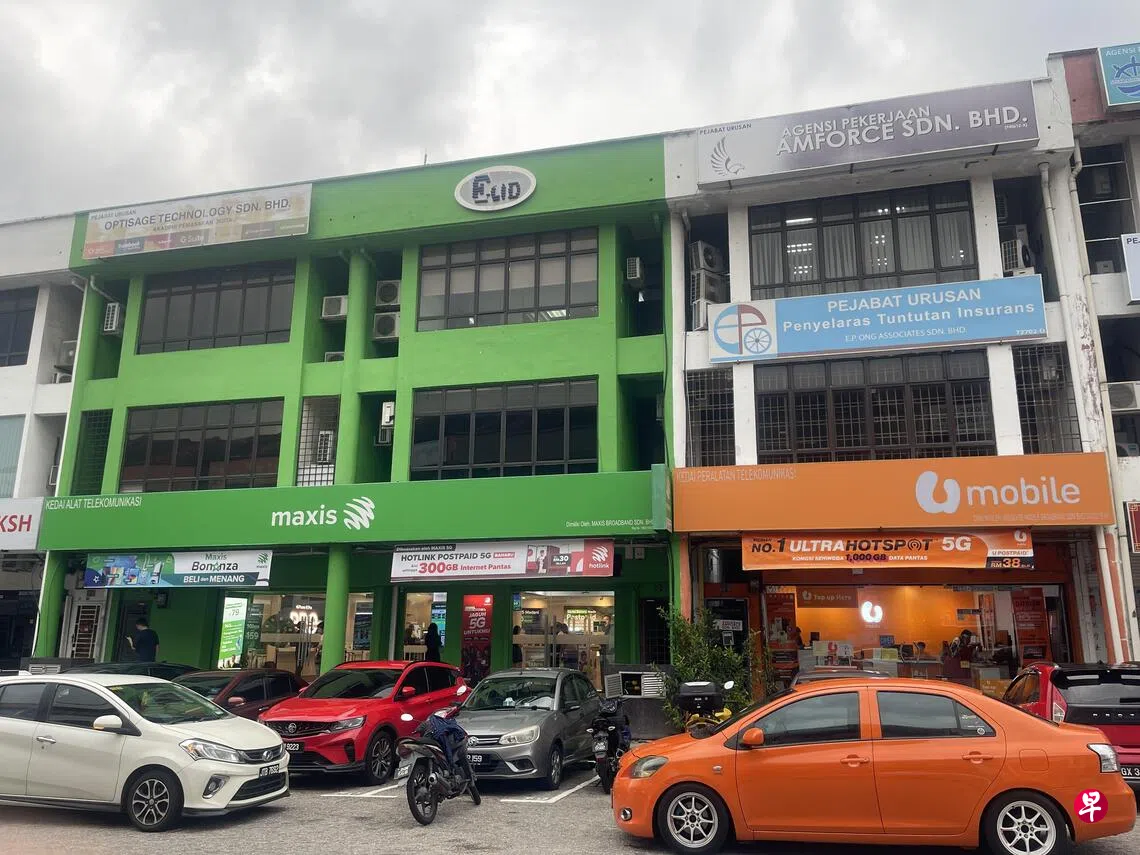
Malaysia’s second-largest telecommunications operator Maxis is reportedly preparing to resume merger talks with third-largest operator U Mobile. Progress in the talks could pave the way for major consolidation in the country’s telecoms sector.
A merger would create a company with a market capitalisation exceeding that of CelcomDigi, currently the country’s largest operator, making it Malaysia’s most valuable telecoms company.
People familiar with the matter told Bloomberg that U Mobile’s shareholders could seek a valuation of at least RM10 billion (about S$3.1 billion). Maxis currently has a market capitalisation of about RM28.3 billion, compared with CelcomDigi’s approximately RM29 billion.
Maxis is controlled by the holding company of the family of late Malaysian tycoon Ananda Krishnan. U Mobile is controlled by Mawar Setia, a company co-founded by Johor princess Aminah Maimunah Iskandariah binti Sultan Ibrahim and tycoon Vincent Tan Chee Yioun, which holds a stake of more than 50%.
The two sides have reportedly discussed a merger several times over the past few years, but previous talks stalled over differences in valuation. Their willingness to resume negotiations has revived the prospect of a merger. People familiar with the matter stressed that discussions were ongoing and that an agreement remained uncertain.
Malaysian information technology industry players believe the country’s current dual 5G network model could not only strengthen supply chain resilience but also give businesses greater flexibility in deploying and managing digital technologies.
Malaysia currently has two independent 5G networks. One is operated by government-linked Digital Nasional Berhad (DNB) and uses equipment from Sweden’s Ericsson. The other is operated by U Mobile and uses technology from Huawei and ZTE.
In an interview with online news outlet Free Malaysia Today, Lorela Chia, founder and president of the Malaysia Association of Sustainable Supply Chain & Innovation (MASSCI), noted that businesses often depend not only on a particular 5G network but also on specific technology suppliers, software, data systems and industrial platforms.
She said a dual-network environment offered the industry a crucial advantage: a wider range of choices.
Chia also said that the more flexibly Malaysia’s connectivity infrastructure could accommodate different technology architectures, the easier it would be for businesses to integrate and upgrade their systems without being constrained by a particular technology.
She urged Malaysia to focus its next phase of 5G deployment on addressing practical problems faced by businesses. These include improving network reliability, interoperability and security, as well as the ability to integrate public 5G networks, private networks, fibre connectivity and edge computing.
