

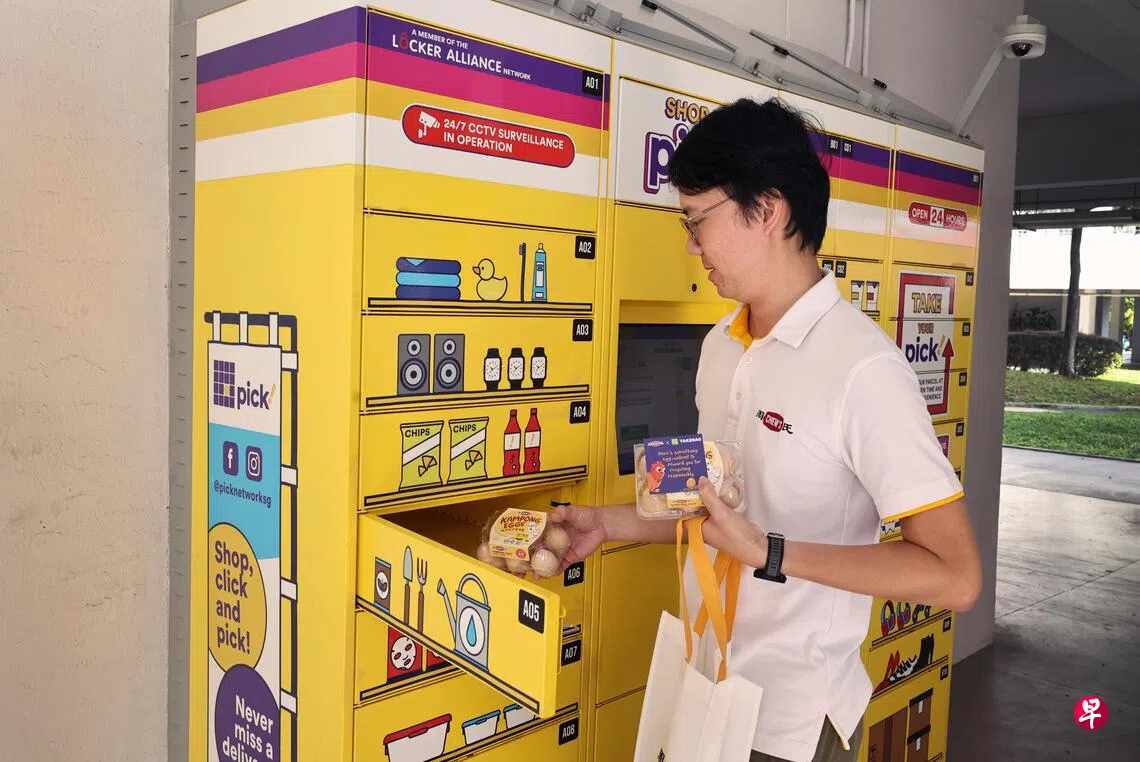
To encourage the recycling of electronic waste, local e-waste recycler KGS has launched a two-month pilot scheme where the public can exchange about 2kg of e-waste for a box of eggs.
From 1 November, members of the public can pack their e-waste in free mailing bags provided by KGS and deposit them in Pick Network parcel lockers near their homes. Once KGS verifies that the recyclables meet the weight requirement, participants will be notified to collect a box of Chew's eggs from a locker.
Pick Network currently has 1,157 parcel lockers in locations including HDB estates, community clubs and transport hubs; 1,134 lockers will be used in the e-waste scheme. Lockers at transport hubs are excluded for security reasons.
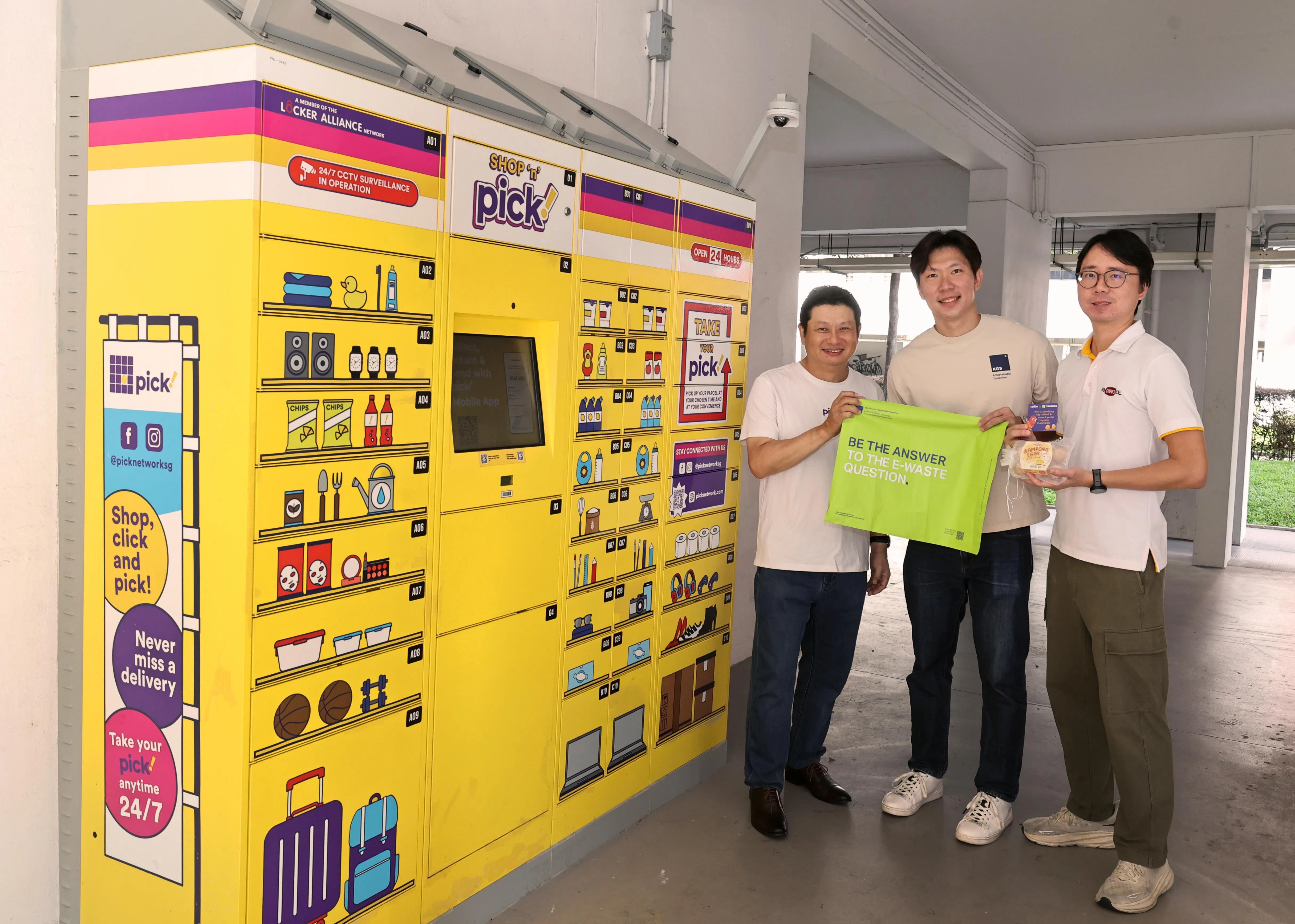
KGS has been working with Pick Network since September 2024 to allow people to deposit e-waste in lockers near their homes. When the initiative began, it received only one or two orders for e-waste mailing bags a week. This has since risen to between 50 and 70 a day.
KGS Co-founder and Director of Operations, T Max, told Lianhe Zaobao that environmental awareness in Singapore had increased significantly over the past two years. The new e-waste-for-eggs scheme builds on existing efforts to encourage people to do their part.
KGS began discussions with Chew's a few months ago about joining forces to expand recycling efforts. They eventually settled on the two-month pilot scheme, during which Chew's will provide 500 boxes of kampung eggs as recycling rewards.
Chew's Head of Marketing Yancy Tay said: “Being environmentally friendly is not difficult, but it requires more action and a little more time spent recycling. Everyone eats eggs, and we hope this small reward will encourage people to recycle more actively.”
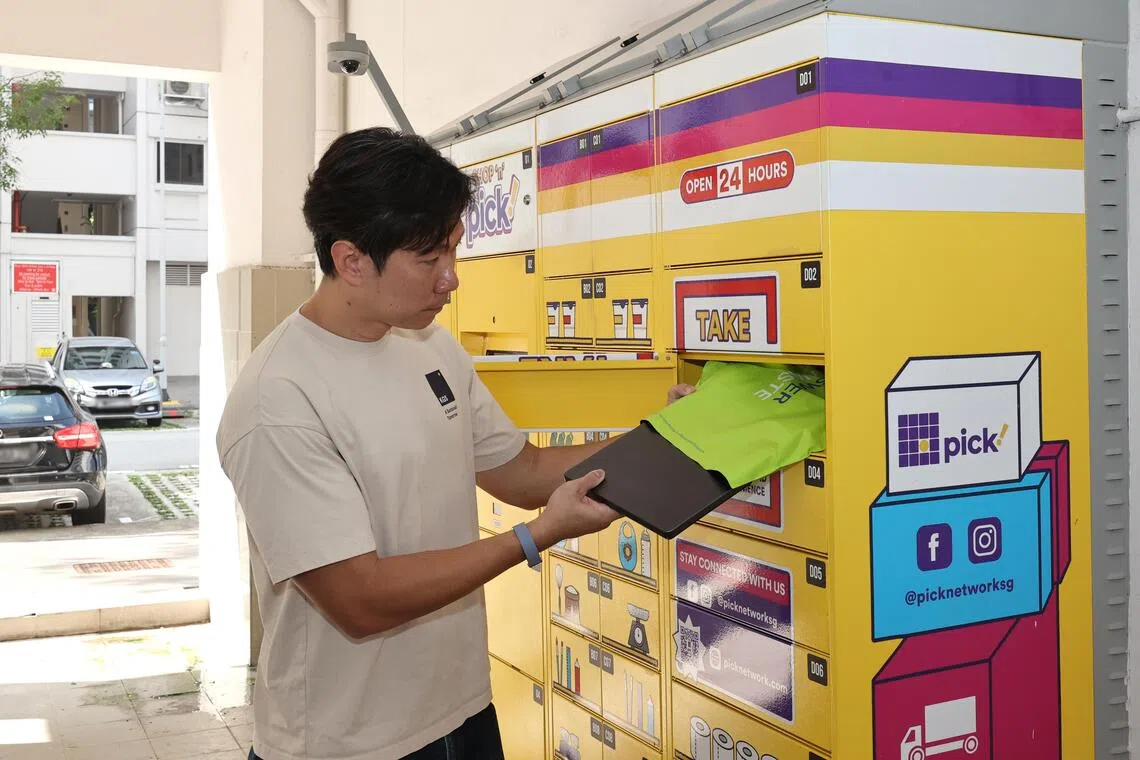
KGS Co-founder and Director of Business Development, Andrew Tay, said the pilot scheme's weight requirement of about 2kg of e-waste was intended to encourage people to make a more conscious effort to recycle, than to send in just one power bank or cable at a time for the egg exchange.
Recycling rewards spark debate, but industry players say it’s practical
Some argue that environmental habits should be cultivated from childhood, questioning whether incentive-based measures such as the Beverage Container Return Scheme introduced this year are sustainable and can truly foster such habits. In response, T Max said Singapore society was relatively pragmatic, and rewards could help drive change.
“I think once there's conditioning of recycling, maybe until the next generation, then you can stop inserting incentives,” he said. “I feel the next generation...are more responsible in terms of the environment.”
KGS operates an e-waste recycling plant in Tuas South Lane with a daily processing capacity of up to 70 tonnes. It is currently operating at 70% capacity. T Max said preparations to expand recycling capacity would have to begin once utilisation approached 80%.
“We are exploring expanding to a bigger space or plus one more plant. We are looking at location already, but of course, finding land not so simple.”
Singapore introduced the Extended Producer Responsibility scheme for e-waste in July 2021, requiring manufacturers and importers of electronic products to ensure that e-waste is properly collected and disposed of. As of the end of August this year, more than 45,000 tonnes of e-waste had been collected for recycling locally, far exceeding the approximately 12,000 tonnes collected in the whole of last year.