

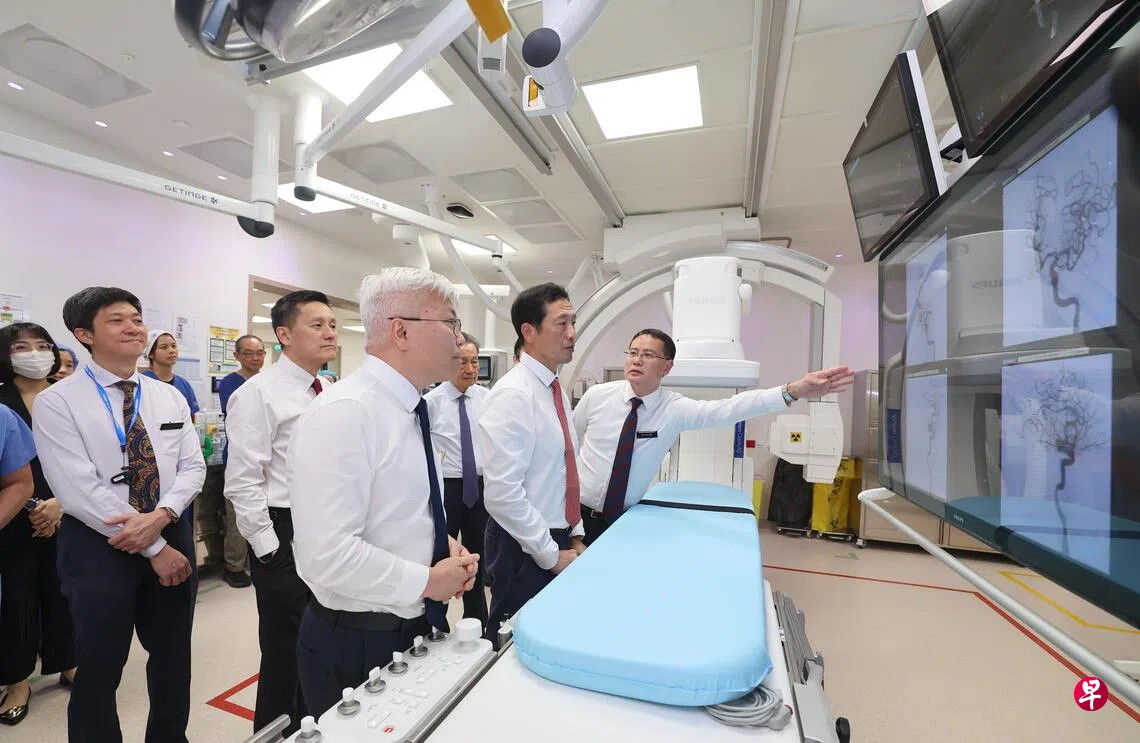
Sudden slurred speech, numbness or weakness in the limbs on one side of the body may be warning signs of an acute stroke. Stroke patients arriving at Singapore General Hospital (SGH)’s new emergency building can now undergo emergency assessment, scans and treatment within the same building, without being transferred elsewhere, saving precious time.
Coordinating Minister for Social Policies and Minister for Health Ong Ye Kung officially opened the Singapore General Hospital (SGH) Emergency/National Neuroscience Institute (NNI) building on Friday (30 October).
The new building houses Singapore’s first emergency department-based angiography suite, enabling stroke patients to undergo Endovascular Thrombectomy (EVT) after diagnosis without being transferred to other hospital buildings. The procedure reopens blocked blood vessels in the brain as quickly as possible.
Through a quality improvement project, the hospital has reduced the median time from a stroke patient’s arrival to the start of EVT from 130 minutes to 82 minutes.
In an interview, Dr Chia Ghim Song, SGH’s director of the Neurointerventional Radiology Service and senior consultant in the Department of Neuroradiology, said the hospital performs 250 to 300 EVT procedures a year, with case numbers rising annually. With the new building in operation, the hospital hopes to shorten treatment times further and improve stroke patients’ chances of recovery.
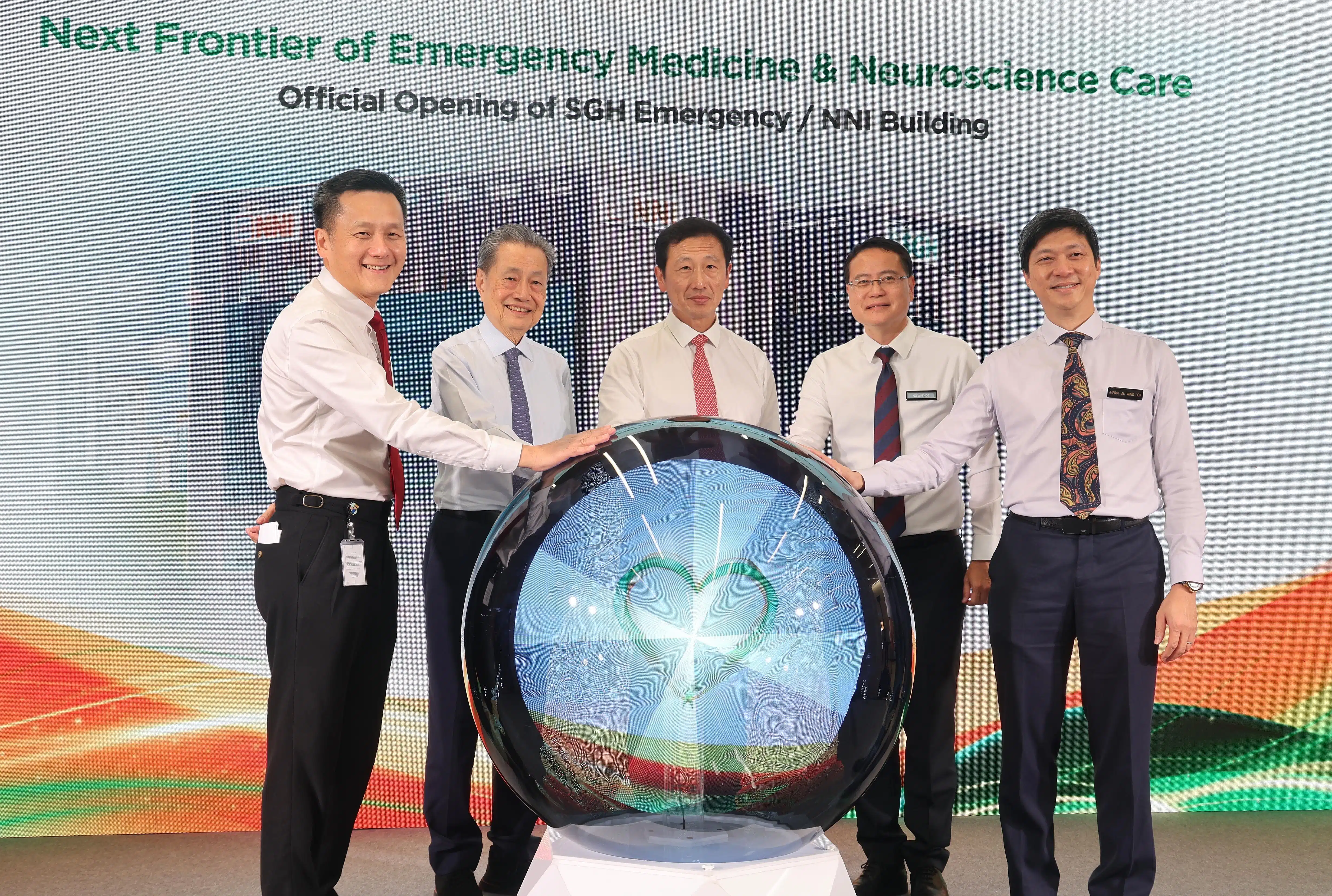
Multiple facilities under one roof
The new 12-storey building brings emergency services, neuroscience specialist outpatient clinics and advanced imaging facilities together within the same facility, providing patients with more seamless care from emergency assessment and diagnosis through to treatment.
In his speech, Ong Ye Kung said co-locating the emergency department and NNI in the same building allows doctors from different specialties to work more closely and speed up treatment during the crucial window for stroke care. Artificial intelligence also helps reduce the time needed for brain scans from up to an hour to just six minutes.
SGH Emergency Department sees over 300 patients a day
SGH’s Emergency Department relocated in January this year to levels three to five of the new building. At 14,000 square metres, the new department is six times the size of its former premises in Block 1, helping the hospital meet growing demand for emergency care.
Ong noted that waiting times at SGH for 95% of serious but not life-threatening emergency cases had fallen from 217 minutes in 2023 to 141 minutes in 2025, a reduction of 76 minutes.
“This reflects the concerted efforts across our healthcare system to ensure that when emergencies happen, patients receive timely care.”
Ong said SGH’s Emergency Department sees more than 300 patients on an average day, about 15% of whom require immediate treatment. Patients must therefore be prioritised according to the severity and urgency of their conditions, rather than on a first-come, first-served basis. He appealed for understanding from patients facing longer waits.
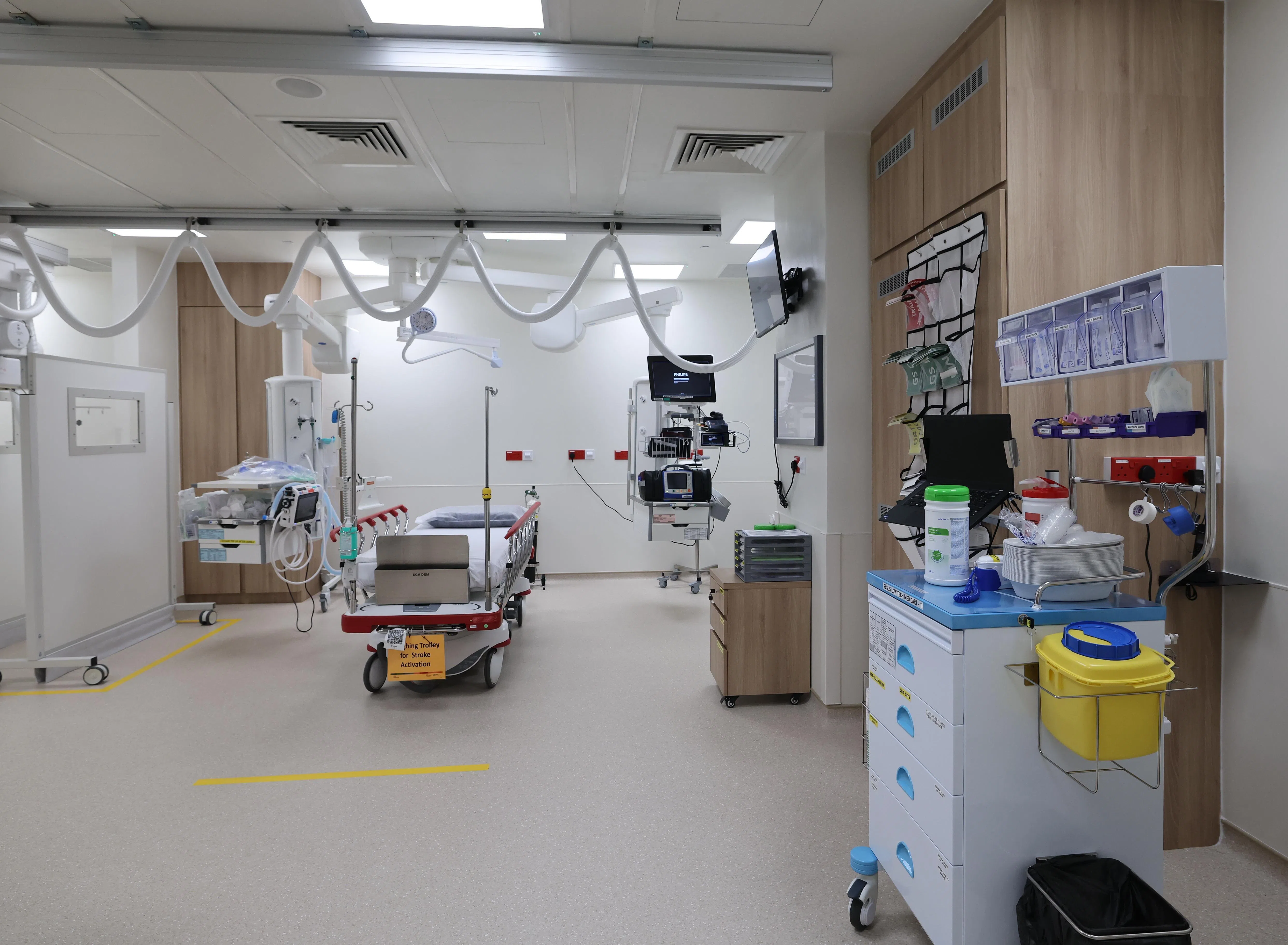
The new emergency department has ten triage rooms, more than double the previous four. It also has 12 rooms in the resuscitation/trauma area and 53 bed spaces in the Critical Care area.
The new building also houses four Acute Medical Wards with a total of 152 beds, including six isolation rooms. These wards mainly care for patients who need short stays for observation and treatment, with the aim of discharging them within 72 to 96 hours.
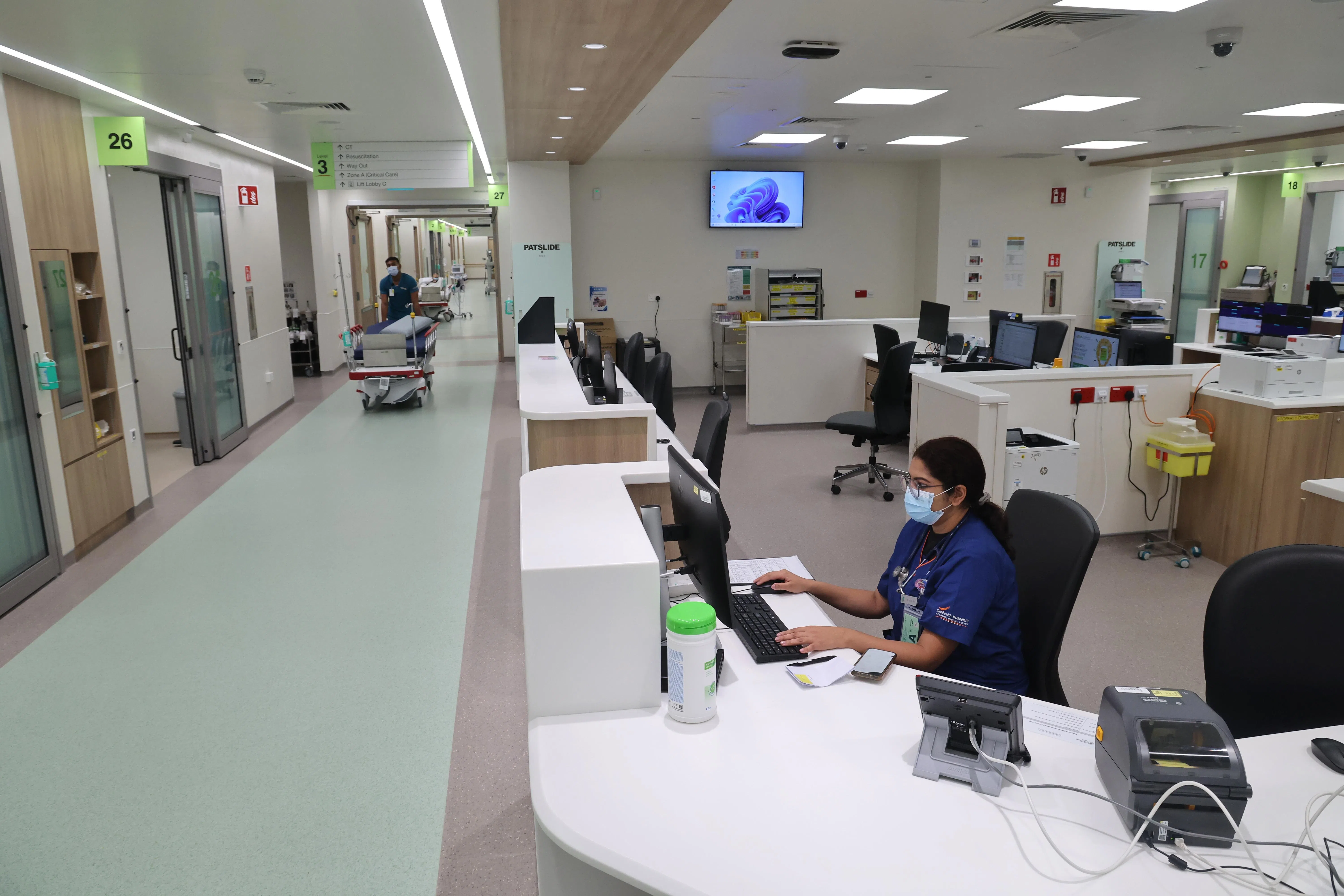
Ong said SGH is implementing its 20-year campus master plan in phases. Besides the new emergency building, future developments will include the Elective Care Centre, the new National Dental Centre Singapore, and new buildings for the Health Sciences Authority and Ministry of Health.
Head and Senior Consultant of the Department of Emergency Medicine at SGHDr Ivan Chua said the new building allows patients to move more smoothly from emergency assessment to acute medical care, neuroscience intervention or advanced imaging as their condition requires.
He said: “Different teams can now collaborate more effectively, bringing expertise from multiple disciplines to provide coordinated responses for complex medical conditions.”
