

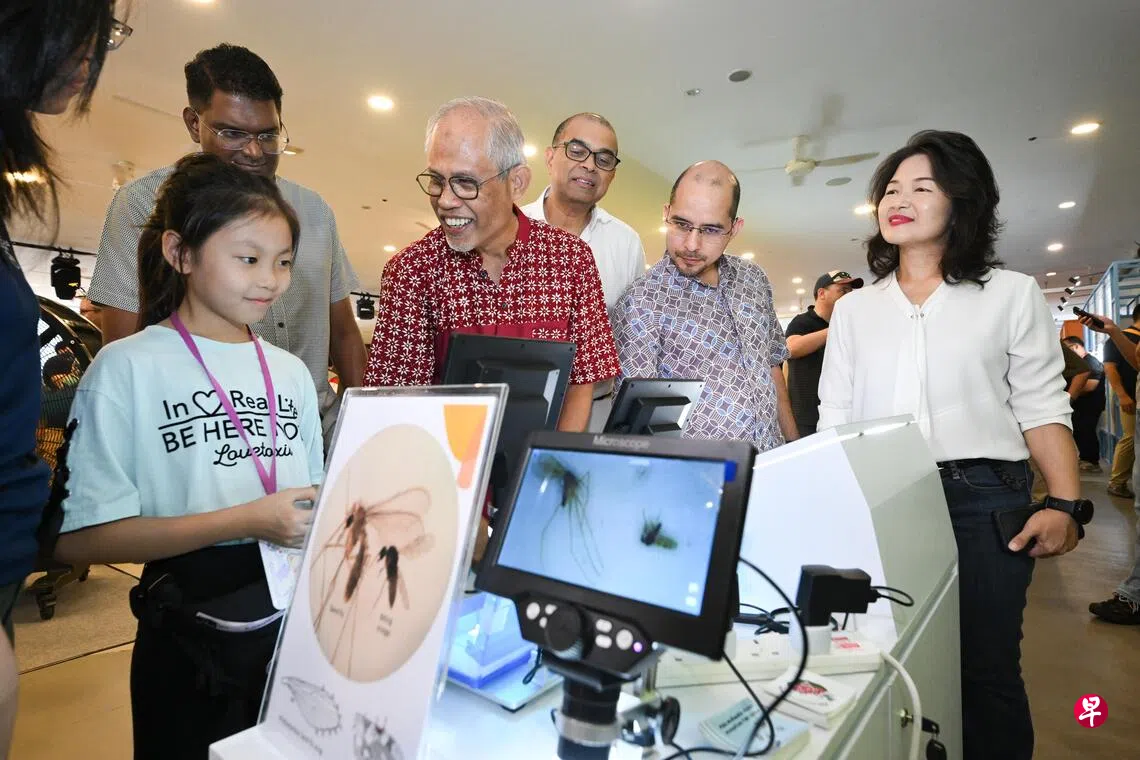
Now in its 10th year, Project Wolbachia has expanded to cover more than 840,000 households, or 53% of households nationwide. Authorities are assessing existing data and how long mosquito suppression lasts to determine the next phase of expansion and whether mosquito production capacity needs to be increased.
The National Environment Agency (NEA) held a community carnival at Our Tampines Hub on Saturday (31 October) to mark the programme’s 10th anniversary. Speaking at the event, Dr Janil Puthucheary, Senior Minister of State for Education and Sustainability and the Environment, said the programme was an important part of Singapore’s overall defence against dengue. However, the public must continue to do their part by keeping homes and neighbourhoods free of Aedes mosquito breeding sites to consolidate and sustain the gains made so far.
On future mosquito-control efforts, Janil said the government would continue investing in technology and capabilities, seeking more cost-effective and effective ways to sustain the programme’s public health benefits.
He said: “We will closely monitor our mosquito populations and our dengue risks, and we will refine our strategies, focus our resources, where they can make the greatest difference in protecting our communities.”
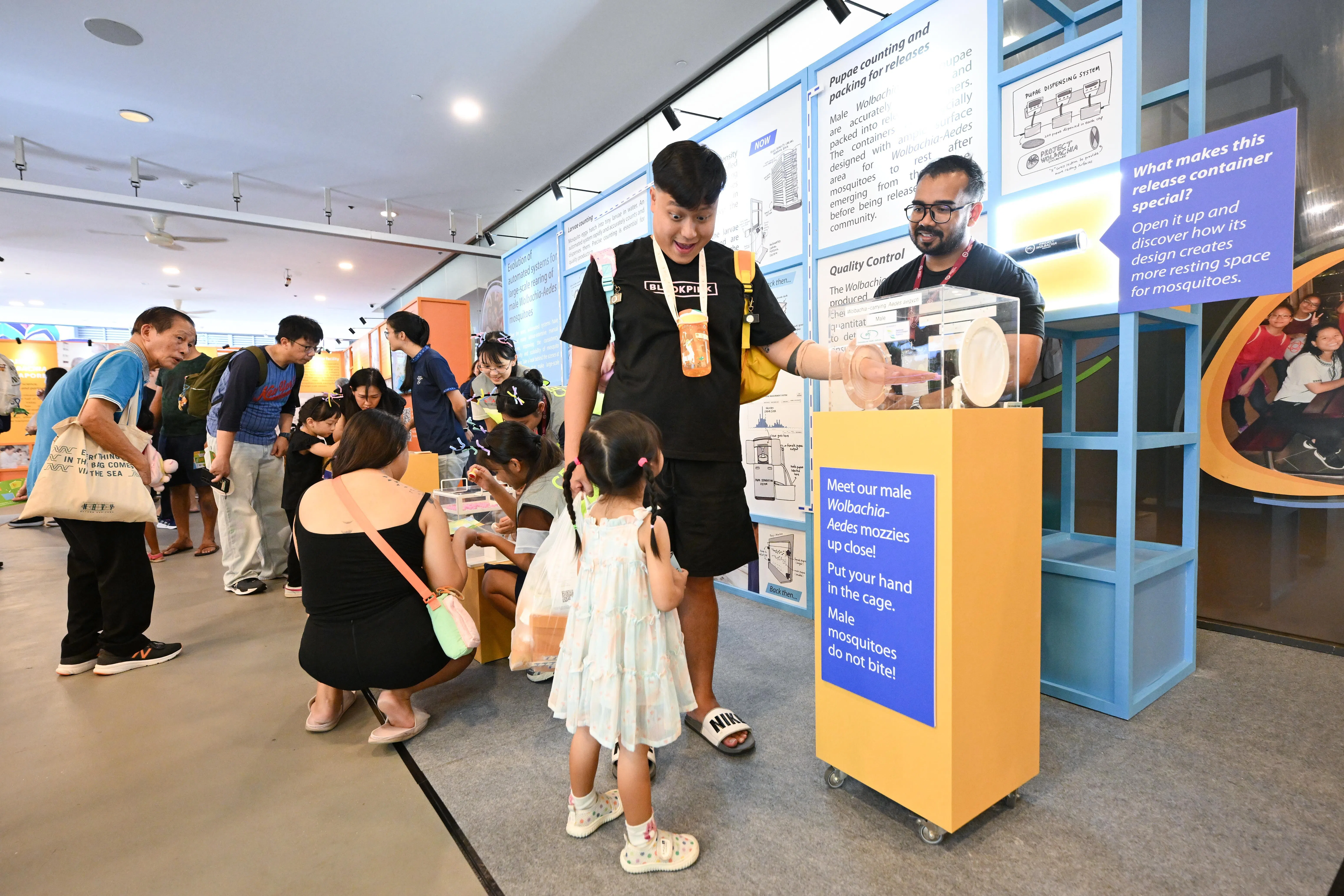
Singapore launched Project Wolbachia in 2016, releasing male Aedes aegypti mosquitoes carrying Wolbachia bacteria to suppress Aedes mosquito breeding and reduce the risk of disease transmission. Singapore currently has two mosquito breeding facilities capable of producing a combined 15 million male Wolbachia-carrying mosquitoes a week.
Asked whether the programme would be expanded to more neighbourhoods and whether new mosquito breeding facilities would be built to increase capacity, Ng Lee Ching, director of the National Environment Agency’s Environmental Health Institute, told the media that authorities were reviewing and analysing all the data to assess their next steps.
She added that authorities were currently prioritising high-risk areas and taking a flexible approach to mosquito releases. If mosquito numbers in an area have been effectively suppressed, releases of male Wolbachia-carrying mosquitoes may be reduced or even halted.
She explained that the authorities are studying how long each suppression can last — in other words, how long can they wait before intervening again, before the mosquito population rebounds. All this is still being studied for the evidence needed before they can finalise the strategy for a nationwide rollout.
To teach the younger generation about dengue prevention, Janil and Minister for Social and Family Development Masagos Zulkifli launched the children’s storybook Kai’s Tiny Adventure with Wozzie on Saturday.
The storybook features the NEA’s Wolbachia mascot, “Wozzie”, and aims to introduce young readers to the science behind Project Wolbachia in an engaging way. The book will be available for loan at public libraries at a later date.
