

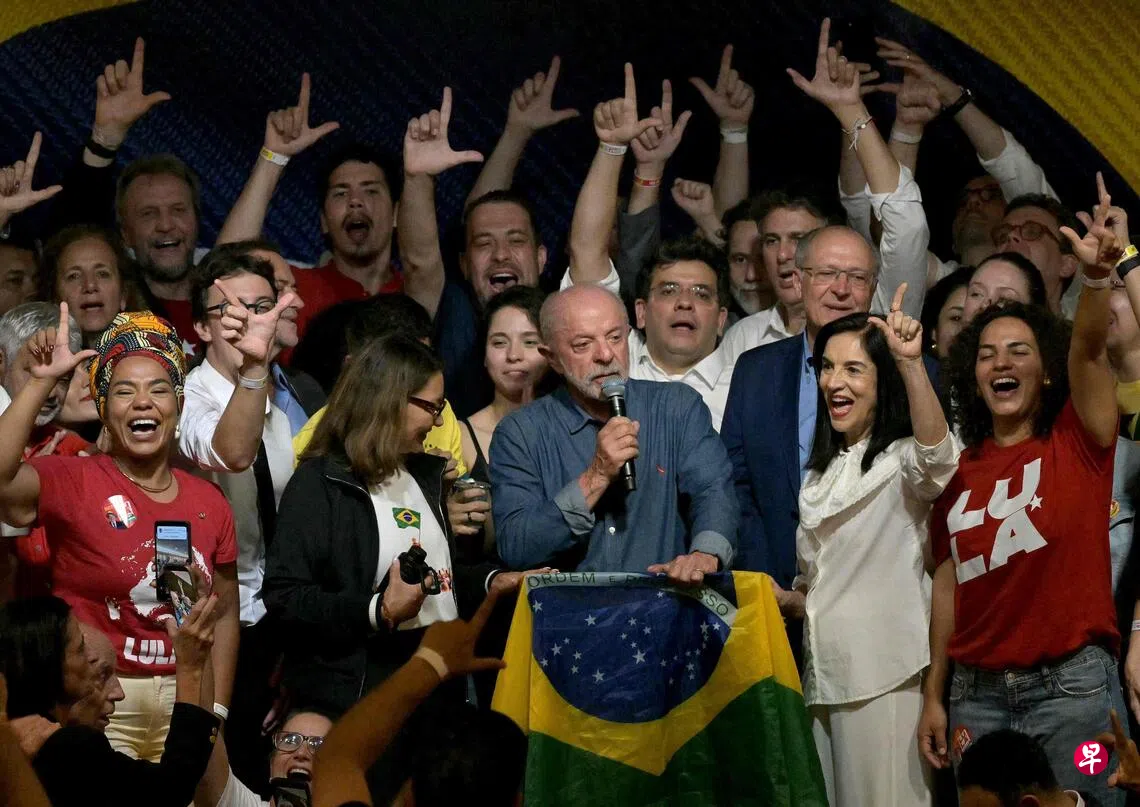
Results from Brazil’s presidential run-off show that incumbent Luiz Inacio Lula da Silva has secured a fourth term in office, narrowly defeating Senator Flavio Bolsonaro, son of former President Jair Bolsonaro.
According to vote counts released by the Superior Electoral Court on Sunday (25 October), Lula, who turns 81 on 27 October, won 51.79% of the vote against Flavio Bolsonaro’s 48.21%, a margin of more than four million votes.
The result not only defied several opinion polls but also set a precedent in Brazilian politics. Lula became the first presidential candidate since the restoration of constitutional democracy in the 1980s to win a run-off after trailing in the first round.
Lula’s victory also temporarily checked the right-wing conservative wave that has recently swept through several Latin American countries.
Flavio plans legal challenge
However, Bolsonaro, 45, has refused to accept the election result and announced that he would launch legal proceedings over the electoral process. He described as unacceptable a ruling by Supreme Court justices on polling day to extend voting by two hours in some constituencies.
“We will pursue legal action and seek to have the election annulled.”
Many in the financial sector had bet on a Bolsonaro victory, and the final count briefly rattled market sentiments.
Bolsonaro’s adamant refusal to concede mirrored his father’s response to his election defeat in 2022. The older Bolsonaro never publicly acknowledged defeat and was later suspected of plotting a coup to obstruct the transfer of power. He was convicted by the Supreme Court and sentenced to prison.
Political and legal experts said there was very little chance of the official election result being overturned. One key reason was the large margin of victory — more than twice the margin by which Jair Bolsonaro lost four years ago.
Moreover, on polling day, Flavio Bolsonaro’s campaign had itself asked electoral authorities to extend voting hours because of heavy rain in traditional right-wing strongholds in the south.
Mario Braga, senior Latin America analyst at risk intelligence firm RANE, said sporadic protests were likely across Brazil in the coming days. From a legal and institutional standpoint, however, these demonstrations were highly unlikely to change the election result.
In his post-election address to the nation, Lula stressed that the victory was due to the public’s firm commitment to defending democratic institutions. He pledged to reform the way the country is governed to give citizens greater participation in major decisions.
However, Lula is widely expected to face a difficult fourth term. Besides confronting a deeply polarised and divided society, he will have to contend with a conservative-dominated Congress. Fragile public finances, heavy government debt, high interest rates and persistent inflationary pressures also pose urgent and formidable economic challenges.
Polling expert Leonardo Barreto said higher-than-expected turnout was crucial to Lula’s run-off comeback. Uncertainties and risks surrounding Flavio’s policy platform also led more voters to opt for the steadiness and assurance projected by Lula.
During the campaign, Lula highlighted his record of alleviating poverty, helping those in need and narrowing the wealth gap. During his third term, Brazil’s unemployment and illiteracy rates, as well as the area of Amazon rainforest cleared, fell to their lowest levels in years.
In the closing stages of the campaign, Lula repeatedly warned that a return to power by the Bolsonaro family would destroy the social security system and could even jeopardise the country’s foreign policy autonomy.
Lula’s re-election also has far-reaching geopolitical implications for the Western Hemisphere, hampering Washington’s plans to rebuild a bloc of friendly right-wing governments in Latin America.
As of press time, the US had not issued an official response to Brazil’s election result. Leaders from Canada and several Latin American countries, as well as European Commission President Ursula von der Leyen, had called to offer congratulations, stressing that they would continue working with Brazil to uphold multilateralism and tackle climate change.
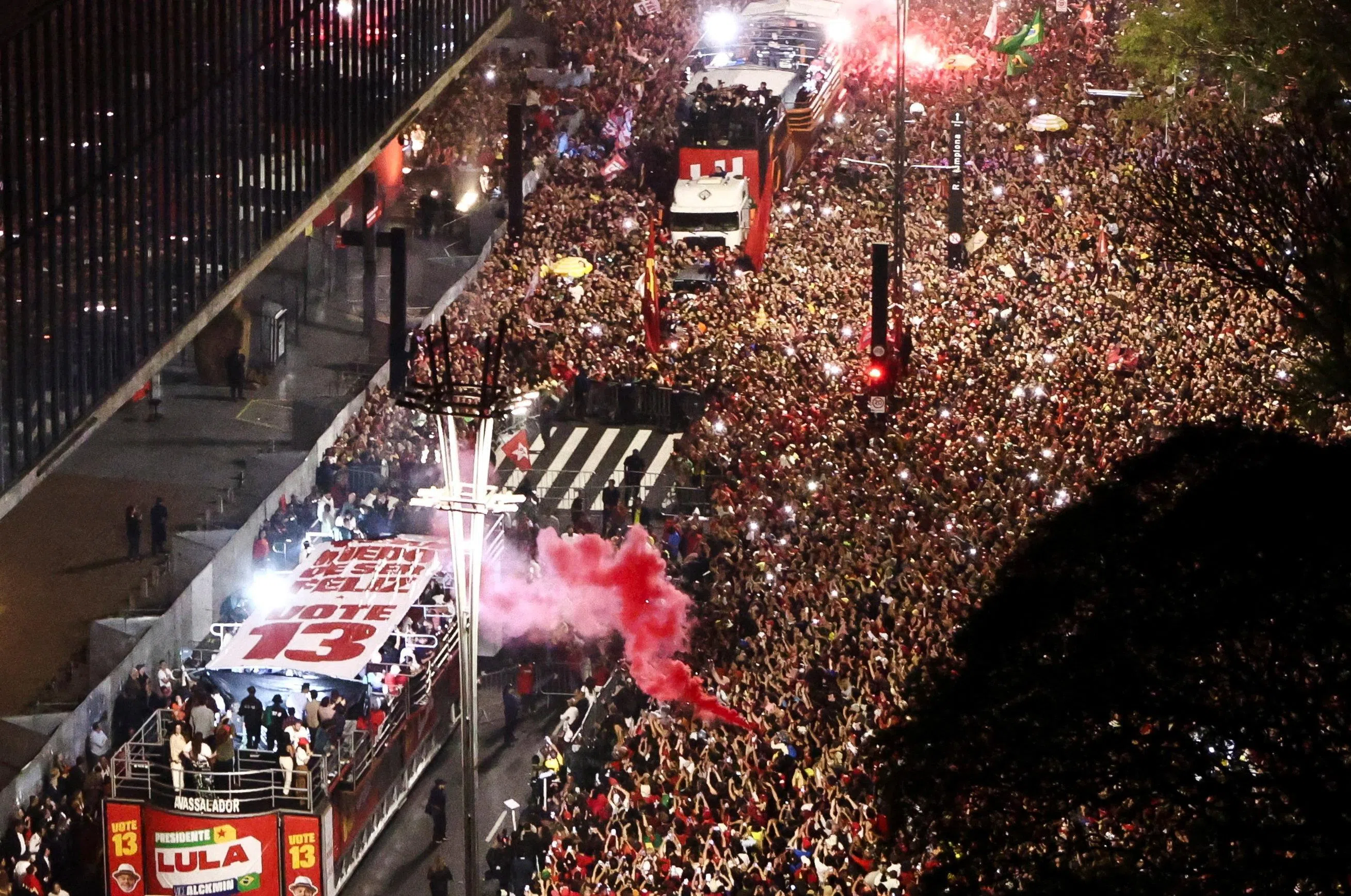
On the night the run-off result was announced, Paulista Avenue in Brazil’s largest city, Sao Paulo, became a jubilant sea of red as tens of thousands of Lula supporters celebrated through the night. Cars crawled along with horns blaring, fireworks lit up the night sky, and chants of “Let's go, Lula!” rang through the neighbourhood.
Lula joined the parade in person. Holding a megaphone, he called out to the crowd, “I just had to tell you that I love you. Tomorrow, the fight continues.”
Supporter Anna Zanatta, 43, shed tears of joy, saying, “Lula's victory represents many things for us: freedom, our democracy, our history.”
Lula’s fourth presidential term will begin on 5 January 2027.
