

With Israel and the US set to hold crucial elections within the next two weeks, a stream of intelligence warnings about Iranian attacks has raised fears that war could erupt at any moment, as the parties appear to be looking for a pretext to fight.
The New York Times, citing diplomats and experts from several countries, reported that the Middle East conflict has entered an extremely dangerous new phase as the US-Iran confrontation escalates.
Officials in US President Donald J. Trump's administration are reportedly concerned that Iran is in the “late stages” of planning attacks on US officials. Iran, meanwhile, appears convinced that the US and Israel are preparing a final strike to force it to submit to US demands.
Veteran security experts warn that even a minor incident could trigger a devastating chain reaction. A single bullet seemingly targeted at a US official, or an accidental explosion near an Iranian leader's bunker, could be enough to ignite a war.
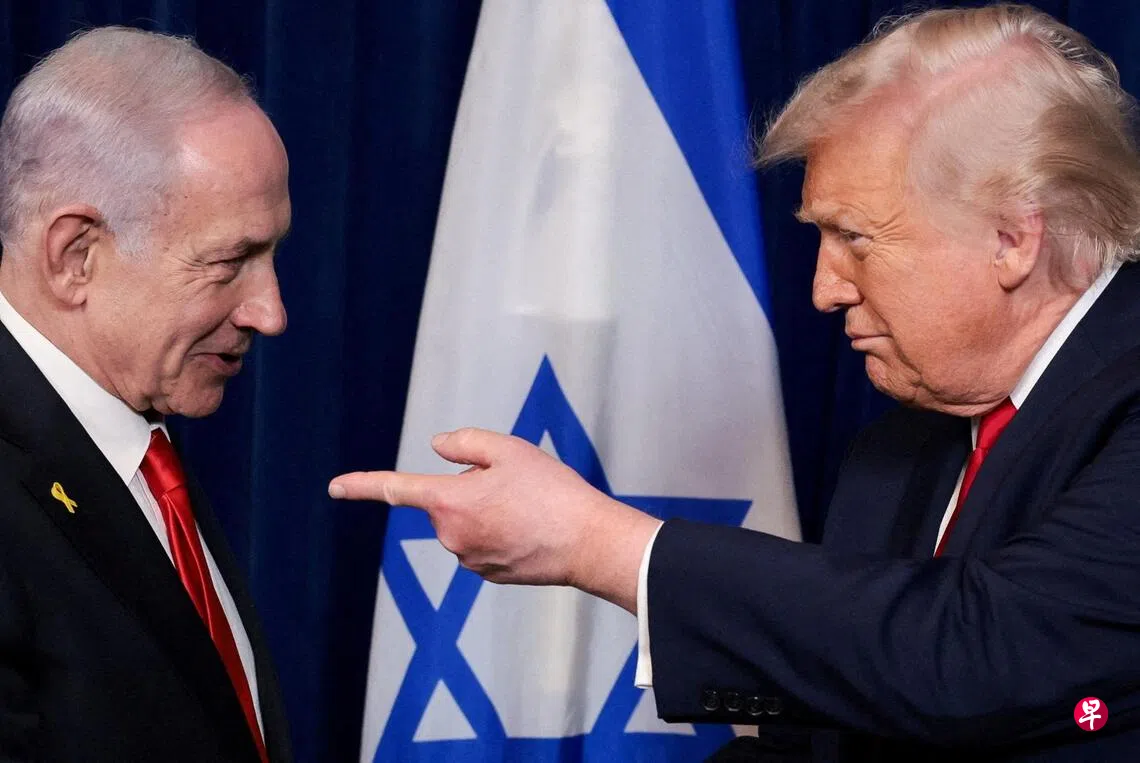
Meanwhile, both Israeli Prime Minister Benjamin Netanyahu and Trump face pivotal elections that could dramatically reshape the domestic balance of power, further complicating calculations on all sides. Israel will hold a general election on 27 October, while the US will hold its midterm elections on 3 November.
Analysts: Netanyahu could strike Iran again before handing over power even if he loses election
Observers say that even with the risk of electoral defeat, Netanyahu is highly likely to launch one final major strike before handing over power. Trump, too, could resort to forceful military action at a critical moment to assert his undiminished authority as commander-in-chief.
Intelligence reports of possible Iranian attacks have mounted in recent weeks. Iran was earlier suspected of planning an attack on a military base in the UK used by US forces. Other intelligence suggests that Iran may try to assassinate US ambassadors in the Middle East and officials on American soil.
Trump did not address the intelligence reports on Saturday (24 October), but said he would soon decide whether to take military action again. He had previously hinted that air strikes on Iran could resume after the midterm elections.
Some officials said the administration had never taken such intelligence as seriously as it does now since the war began. Senior US officials said operational plans drawn up by US Central Command had expanded the list of bombing targets to include energy infrastructure and other facilities vital to Iran's economy.
In response, senior Iranian adviser Mahdi Mohammadi issued a stern warning in a recent social media post. “We are in a surprise phase of the war, and we will not fight a classic war,” Mohammadi said. “It will be an asymmetrical, fierce and conclusive war that will target the enemy’s strong points and weak spots.”
Houthis launch seven more attacks on targets in Saudi Arabia in 24 hours
Meanwhile, the Iran-backed Houthis have continued their attacks on Saudi Arabia. The group claimed on Saturday that it had carried out seven attacks on targets in the kingdom over the previous 24 hours. These included three airports, among them King Khalid International Airport in the capital Riyadh, as well as energy facilities, an oil pipeline and an air base. Saudi Arabia said it had intercepted several missiles.
Repeated Houthi attacks on King Khalid International Airport since the start of this month have killed 17 people and injured more than 300.
However, the airport reopened two terminals on Sunday (25 October) after a two-week closure. Earlier that day, dozens of flights departed from King Khalid International Airport for destinations including London, Dubai and Beijing.
The Houthis issued another warning that day, however, saying the airport remained unsafe and was a “military target”.
As the risk of attacks by the Houthis and Iran rises, the US State Department has updated travel warnings for 13 Middle Eastern countries, including Saudi Arabia, Qatar, the UAE and Bahrain.
In one such warning, the US embassy in Saudi Arabia said the risk of potential Houthi attacks had increased, while Iran was seeking to target US government officials in the region.
