

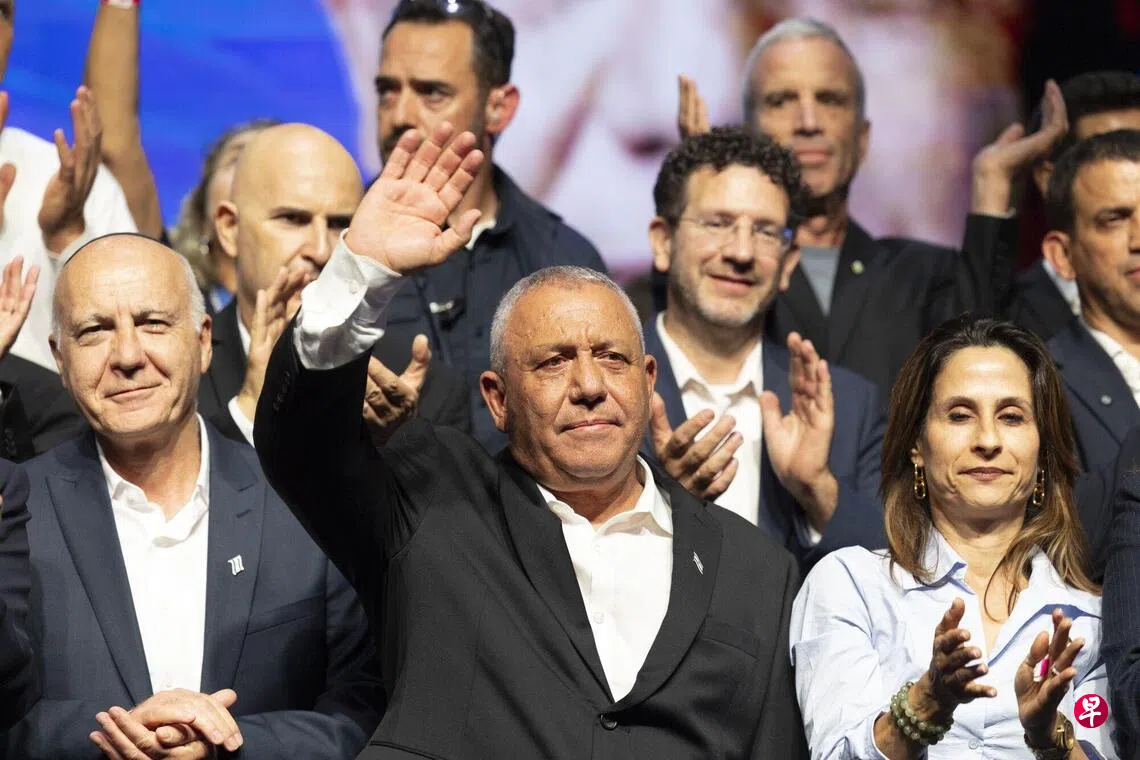
Israel holds a general election on Tuesday (27 October), with Prime Minister Benjamin Netanyahu’s political survival at stake. It is the country’s first general election in the three years since the Gaza war broke out. With the threat of military conflict with Iran still looming, the vote is drawing close international attention. How does Israel’s general election work? And what might its political landscape look like?
How does Israel’s general election work?
The Knesset has 120 seats, elected through proportional representation. Voters cast their ballots for parties rather than individuals. Parties must secure at least 3.25% of valid votes to enter parliament, with seats then allocated according to their share of the vote.
A party needs at least 61 seats to form a government on its own. No party in Israel’s history has ever crossed that threshold alone, however, and every government has been a coalition of several parties.
After the election, the president tasks the leader of the largest party in parliament, or the party best placed to form a government, with negotiating a governing coalition within 42 days. If efforts to form a government fail, another general election must be held.
Voters’ main concerns have included cost-of-living pressures, war and national security, as well as the dispute over military service exemptions for ultra-Orthodox Jews, and Netanyahu’s controversial judicial reforms. Matters of national security and government accountability draw the most attention.
Who are the leading contenders for prime minister?
Netanyahu has served as prime minister on three occasions, spending more than 18 years in office. He is Israel’s longest-serving prime minister since the country’s founding in 1948.
He has consistently stressed threats to the country’s survival and placed particular emphasis on security. Hamas’ cross-border attack on 7 October 2023 dealt a devastating blow to his reputation as “Mr Security”.
The International Criminal Court has also issued an arrest warrant for him over suspected war crimes arising from Israel’s fierce assault on Gaza. At home, he faces charges of corruption, fraud and breach of trust, making him the first sitting prime minister in Israel’s history to stand trial.
Netanyahu’s main rival is former military chief of staff Gadi Eisenkot. He leads the centrist Yashar party, advocating government reform, universal military service and a thorough investigation into the grave failings behind the Hamas attack on 7 October.
Eisenkot’s military background and image as a political newcomer with relatively little baggage have attracted considerable public support. He has pledged to heal the social divisions caused during Netanyahu’s time in office, and made firm commitments to strengthening national security and reviving the economy.
Other opposition leaders, such as former prime minister Naftali Bennett and former finance minister Avigdor Lieberman, are right-wing politicians who take a hard line on national security.
What obstacles stand in the way of forming a government?
Netanyahu and Eisenkot are locked in a tight race, with the outcome still uncertain. Even if a party wins the most seats, its leader is not guaranteed to become prime minister.
The final pre-election polls published by Israeli media last Friday (23 October) showed Eisenkot’s Yashar party narrowly ahead of Netanyahu’s Likud, with seat projections for both parties ranging between 20 and 30. Asked who was better suited to be prime minister, 43% to 46% of respondents backed Eisenkot, compared with 34% to 36% for Netanyahu.
Netanyahu’s bloc is expected to win 50 seats, down from its existing 67 and well short of the 61 needed for a majority. He could still secure another term if he wins over his existing far-right allies or new partners. But divisions remain within the governing coalition over the issues voters care most about.
Four parties opposed to Netanyahu signed a “non-aggression” pact in September, agreeing to work together to oust him. But this “change bloc” has yet to settle on a candidate for prime minister, although Eisenkot is widely seen as the frontrunner.
Eisenkot has made clear that he will not form a government with Netanyahu, even under an arrangement to take turns as prime minister.
Coalition negotiations in Israel have traditionally been protracted, and this time is likely to be no exception. Analysts believe some smaller parties, such as Raam and the Joint List, which represent the Arab minority that makes up 20% of Israel’s population, could tip the political balance and determine the outcome.
