

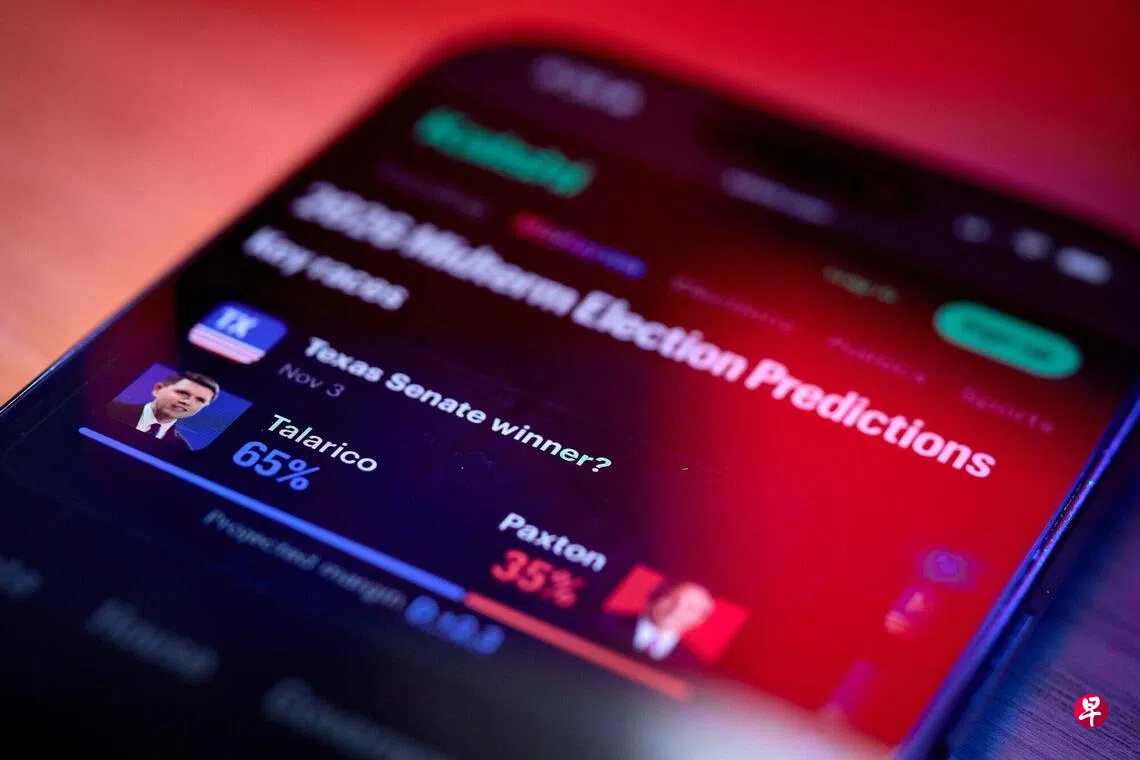
As the US midterm elections enter the final stretch, controversies have erupted in the Senate races in Alaska and Texas.
In Alaska, President Donald J. Trump accused Democrats of trying to confuse voters and demanded that Democratic candidate Mary Peltola and a candidate who shares the incumbent Republican senator’s name be removed from the ballot. In Texas, Republican Senate candidate Ken Paxton is embroiled in scandals over the misuse of public funds and financial support from wealthy donors.
In a social media post on Wednesday (28 October), Trump cited a New York Times report published that day saying that Alaska Democrats had illegally recruited Dan J. Sullivan Jr., who shares a name with the state’s incumbent senator, Dan S. Sullivan, to split the latter’s vote.
Trump described this as election fraud at the highest level, saying that “FAKE Dan Sullivan” and Peltola should both be removed from the ballot and prosecuted.
According to The New York Times, Peltola’s campaign recruited two spoiler candidates to dilute Sullivan’s vote. Besides the two Sullivans and Peltola, the ballot also includes long-shot candidate Gerald Heikes. Heikes is running as a Republican, while Sullivan Jr. is an independent.
The report quoted Peltola’s former campaign manager as saying that she knew about the recruitment of the spoiler candidates but was not directly involved.
The New York Times noted that the practice, known as ballot stacking, is usually legal and has been used by both parties in Alaska.
Alaska is one of the key states that will determine control of the Senate. Republicans previously tried to disqualify Sullivan Jr., but a court rejected the attempt.
Last week, the US Department of Justice filed a pre-emptive lawsuit in federal court seeking to block certification of Alaska’s election results should Sullivan narrowly lose his re-election bid.
Texas Republican senator seeking re-election dogged by scandals
In Texas, Republican Senate candidate Ken Paxton has drawn controversy over his frequent travel at public expense.
According to The New York Times, Paxton has made about 350 trips outside Texas accompanied by a taxpayer-funded security team since being sworn in as state Attorney-General in 2015. These include 25 overseas trips to destinations such as South Africa and India. Texas law, however, does not restrict his use of state-funded security to official business.
Records show that Paxton has also received generous support from wealthy friends, who contributed US$730,000 (about S$930,000) towards his legal fees in a securities fraud case. They also paid for his hunting and fishing trips, tickets to the Grammy Awards and other expenses.
Paxton has long been dogged by scandals. He was indicted on securities fraud charges shortly after taking office as state Attorney-General in 2015, although the charges have since been dropped. He was also impeached over allegations of abuse of office and has faced scandals involving extramarital affairs and socialising with a fugitive. He denies wrongdoing.
Paxton’s Democratic opponent, James Talarico, said Paxton “became a multimillionaire on a government salary” and questioned whether he served only himself rather than the voters.
Paxton, meanwhile, has sought to connect with voters by highlighting his humble upbringing as the son of an Air Force pilot.
Texas has not elected a Democrat in more than 30 years, but this year’s race is unusually competitive, suggesting that Talarico’s attacks on Paxton may have resonated with some voters.
